Technology Behind Accent Harmonizer
Phonetic Adjustments
Here are the main details about how Accent Harmonizer makes phonetic adjustments:
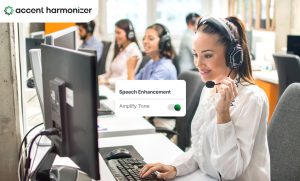
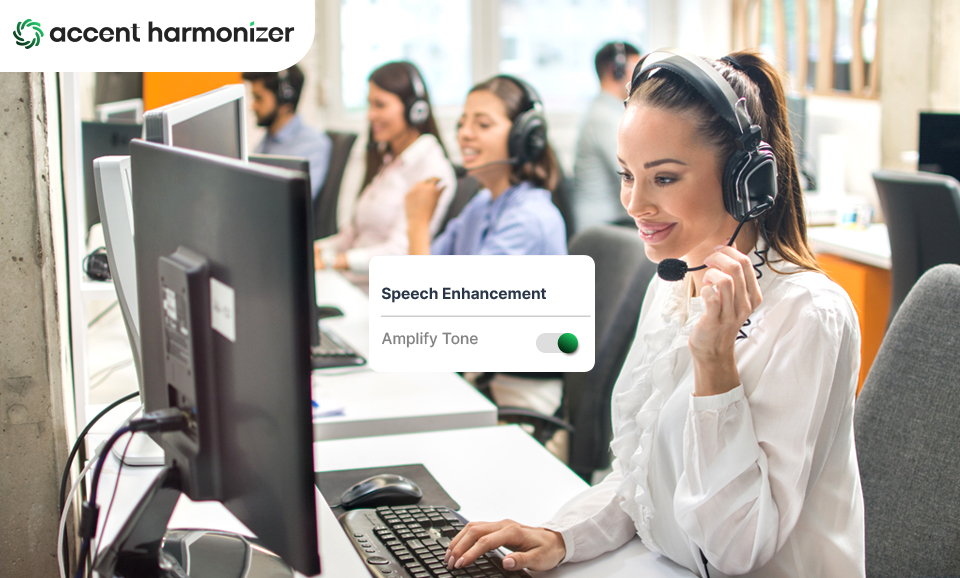
- Targeted Modifications: Accent Harmonizer makes small, precise changes to certain sounds or syllables, like adjusting vowel sounds or how consonants are pronounced. For example, it can turn a harsh ‘g’ sound into a softer, more neutral ‘g’, which may seem unusual but makes speech clearer. By making these subtle changes, the system keeps the accent’s character while making it easier to understand.
- Preserving Nuance: The technology maintains the emotional tone, pitch, and rhythm of speech.
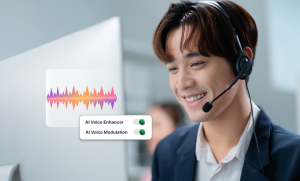
- Real-time Adjustment: Changes happen instantly, without any noticeable delay in the conversation.
Natural Output
Benefits of Accent Harmonization in Contact Centers
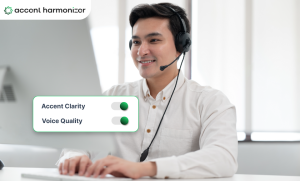
Accent Clarity AI filters sound and re-engineers the conversational experience in real-time. The platforms can simultaneously reduce agent cognitive load and improve customer understanding.
1. Measurable Improvement in Customer Experience (CX)
Clear speech is a fundamental pillar of customer trust. In high-stakes environments like financial services or technical support, Accent Clarity AI ensures that the technical nuance of a solution is never lost in translation.
First Call Resolution (FCR): Based on internal performance data, reducing phonetic ambiguity directly correlates with a higher FCR. When customers understand the solution the first time, the “callback rate” drops significantly.
Direct Feedback: Rather than hypothetical scenarios, our deployment data shows that users of AI voice clarity solutions report a marked decrease in “customer frustration markers” during sentiment analysis.
2. Operational Efficiency and Cost Reduction
From an operational standpoint, accent harmonization for contact centers isn’t just a quality tool—it’s a cost-saving engine. By utilizing AI speech processing without distortion, centers can optimize their two most critical KPIs:
Reduction in Average Handling Time (AHT): When agents do not have to repeat complex instructions, talk-time is reduced. Our benchmarks show that minimizing phonetic friction can lead to a 15% reduction in staffing costs per shift.
AHT Metrics Optimization: Clearer communication allows for faster data entry and more accurate post-call summarization by ASR (Automated Speech Recognition) tools.
3. Agent Wellness and Retention
Expertise in contact center management shows that “repetition fatigue” is a leading cause of agent burnout in international teams.
Cognitive Load Reduction: By using an accent harmonizer AI, the cognitive effort required for both the agent and the customer is lowered.
Empowerment: Agents can focus on complex problem-solving and emotional empathy rather than the mechanics of pronunciation, leading to higher job satisfaction and lower turnover rates in multilingual hubs.
Global Applications of Accent Harmonization
- Remote Work Efficiency: Remote employees no longer need to struggle with miscommunication caused by regional accents.
AI Voice Bots & ASR
Automated Speech Recognition (ASR) systems often struggle with different accents, leading to errors in AI services such as voice bots. Accent Harmonizer helps ASR systems better understand speech, leading to more accurate voice bot responses and improved customer service. For example, with Accent Harmonizer, the ASR word error rate can decrease from around 12% to 5%, demonstrating significant improvements in clarity and reliability.
- Improved ASR Accuracy: Enhanced voice recognition reduces errors in AI-driven interactions.
- Better Voice Bot Interaction: Voice Bots are more reliable, creating a smoother customer experience.
Accent Harmonization vs. Neutralization
- Accent Harmonization: Improves clarity without eliminating the speaker’s identity.
- Accent Neutralization: Attempts to standardize speech to a “neutral” accent, often leading to a loss of cultural identity.
Why Choose Omind’s Accent Harmonizer?
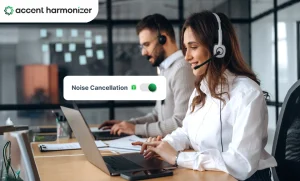
- Real-time Adjustments: Speech is harmonized as soon as it’s spoken, with no noticeable delay.
- Seamless Integration: Works alongside existing contact center tools and systems.
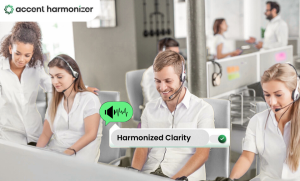
- Natural, Authentic Sound: Retains the emotional tone and personality of the speaker’s voice.