Unconscious bias has long been a challenge in workplaces. While organizations invest heavily in diversity, equity, and inclusion initiatives, accent bias often goes unaddressed—even though it can subtly shape how candidates and employees are perceived. In interviews, reviews, and promotion discussions, people may unintentionally attribute competence, intelligence, or leadership qualities based on how someone sounds rather than what they say.
As global teams become more distributed and multilingual, the need for mitigating accent-based discrimination in the workplace is essential. Accent-related judgments may influence hiring outcomes, feedback quality, or advancement opportunities in ways that do not reflect actual performance. AI-powered accent clarity and speech-support tools are emerging as one-way organizations can create a more equitable and consistent evaluation environment.
This article explores how unconscious accent bias emerges, where it impacts HR decisions, and how AI-driven clarity tools—when used responsibly—can help reduce communication-based barriers.
Accent Bias: A Hidden Barrier in a Global Workforce
Accent bias does not always stem from intent. It often arises from cognitive shortcuts people use to interpret unfamiliar speech. When a listener struggles to understand someone due to fast speech, strong accents, or unfamiliar phonetic patterns, they may subconsciously associate the speaker with attributes unrelated to their actual capabilities.
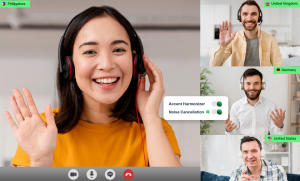
This becomes especially relevant in hybrid and remote workplaces, where audio-based communication dominates interviews, evaluations, and cross-functional collaboration. When decisions rely heavily on voice-only interactions, clarity challenges can unintentionally affect perceptions and limited career advancement opportunities.
Accent bias may influence:
- Candidate screening during phone interviews
- Perceived communication skills in performance evaluations
- Executive presence assessments
- Leadership potential judgments
- Promotion discussions where verbal clarity is prioritized
For global teams, this creates an uneven playing field—particularly for multilingual speakers who are fully qualified but face unintended disadvantages due to accent-related clarity gaps.
Why Accent Bias Matters in HR Decision-Making?
Here are some reasons for fixing accent bias is essetial for HR decision making:
- Hiring Decisions Rely Heavily on Communication
Many roles—sales, support, compliance, customer-facing positions—require strong verbal communication. Yet the evaluation of communication skills often blends clarity and accent in ways that are difficult to distinguish. Candidates with strong credentials may be evaluated less favorably if their speech is harder to understand in an audio-only interview setting.
- Promotion and Leadership Assessments May Be Influenced by Speech Patterns
Leadership qualities such as “confidence,” “presence,” or “clarity of thought” are sometimes inferred from how people sound. This creates structural disadvantages for multilingual employees who express ideas clearly but have distinct regional or linguistic accents.
- Performance Reviews Can Be Affected by Perceived Communication Difficulty
Employees who communicate across time zones or with global teams may face repeated requests to clarify themselves. Over time, these interactions can shape perceived effectiveness—even when job performance is strong.
- Global Teams Need Consistent, Fair Evaluation Standards
As organizations scale across borders, fairness in communication-based evaluations becomes an essential part of supporting diverse teams. Accent bias affects inclusion, psychological safety, and employee confidence.
Where AI Can Support Fairer Communication-Based Evaluations?
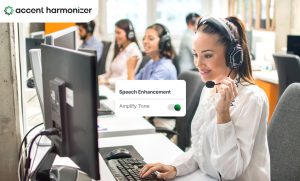
Accent clarity technology focuses on increasing intelligibility—not on erasing identity, changing tone, or replacing someone’s natural voice. It enhances pronunciation, reinforces phonetic patterns, and improves speech clarity in real time so listeners can understand without strain.
When used responsibly, these tools may support fairer HR processes in several ways:
- Creating More Objective Audio Conditions for Interviews
Unconscious bias can intensify when listeners struggle to follow speech during interviews. Real-time accent clarity tools may help reduce those comprehension barriers. Interviewers hear clearer, more intelligible speech—supporting evaluations that focus on content rather than delivery challenges.
- Supporting Global Employees in Presentation-Heavy Roles
Employees who must present updates, pitch ideas, or lead meetings across regions may benefit from enhanced clarity. This levels the playing field when perceptions hinge on delivery rather than skill, improving employee confidence.
- Improving First Impressions in Remote Communication
Remote hire often involves phone screens or audio-first interactions. Clearer speech may help candidates convey their ideas without repeated clarifications, making evaluations smoother for both parties.
- Reducing Cognitive Load for Evaluators
Listeners expend cognitive effort when parsing unfamiliar accents. When speech becomes easier to process, evaluators can focus on substance rather than decoding meaning.
- Supporting Multilingual Employees in High-Stakes Conversations
Performance evaluations often assess communication effectiveness. Tools that improve clarity may help multilingual employees express themselves without being disadvantaged by accent-related friction.
What Accent Clarity AI Does?
Accent clarity systems do not remove accents or replace voices. It uses real-time phonetic resynthesis to map the speaker’s phonemes and subtly adjusts the acoustic features. The platform focuses on intelligibility reducing friction in enterprise training by:
- Reinforcing unclear consonants and vowels
- Adjusting phonetic features that may be difficult for listeners to parse
- Improving consistency across varied audio environments
- Preserving natural tone, rhythm, and identity
- Smoothing only the parts of speech that impact comprehension
Responsible Use Matters: Safeguards for Fair Deployment
Accent clarity AI is not a substitute for bias-free hiring practices. It is one component of a broader fairness strategy. Deployment responsible includes:
- Ensuring That Meaning Is Never Altered
Speech enhancement tools must not change intent or content. Only clarity—not substance—should be improved.
- Prioritizing Voluntary Use
Employees and candidates should understand how the tool works and opt in where appropriate.
- Avoiding Accent Suppression
The goal is not to standardize accents, but to support equitable understanding.
- Training HR Teams on Bias Awareness
Accent clarity supports fairness, but it does not replace formal bias training or structured evaluation processes.
- Maintaining Transparent Data Practices
Speech data should be handled with clear governance aligned with privacy and compliance expectations.
Framework for Integrating AI Into Communication Workflows
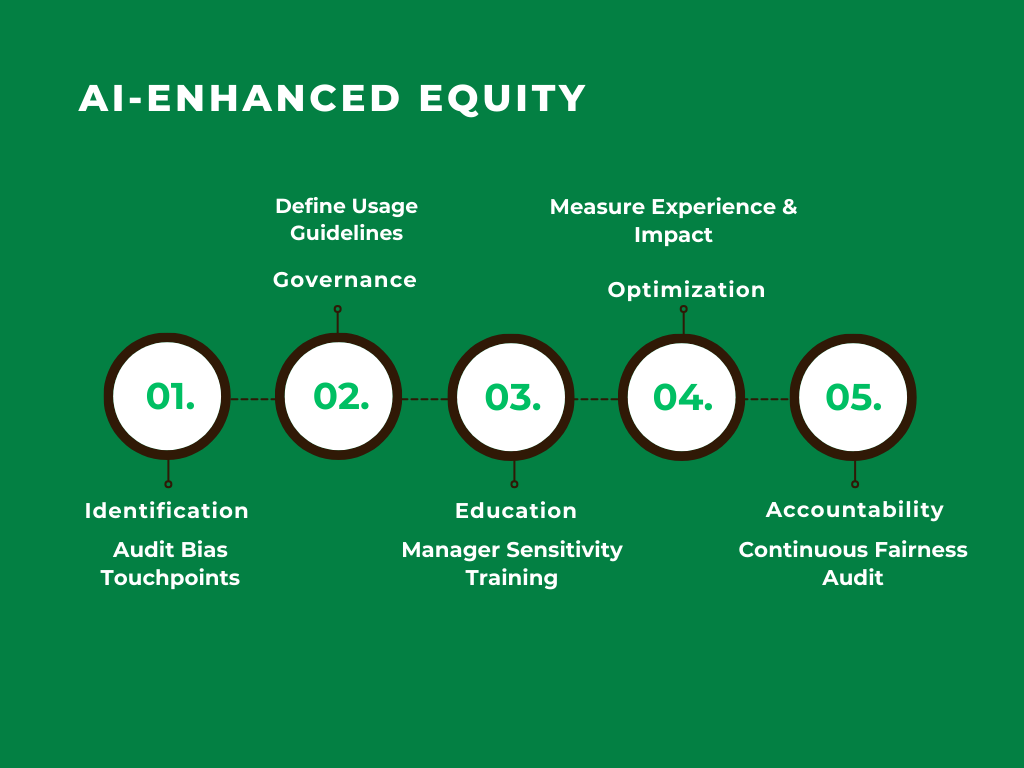
Organizations exploring clarity-enhancing tools can follow a structured approach:
Step 1: Identify Communication Points Where Bias Might Occur
- Initial screening
- Phone or video interviews
- Performance reviews
- Manager–employee check-ins
- Leadership evaluations
Step 2: Establish Clear Guidelines for AI Use
Define where clarity assistance is appropriate and how employees or candidates can opt in.
Step 3: Train Managers on Interpretation and Fairness
HR leaders should understand that accent clarity supports comprehension—not perception.
Step 4: Measure Impact on Experience and Confidence
Assess whether clearer communication leads to:
- fewer misunderstandings
- smoother interviews
- more accurate evaluations
- better employee feedback
Step 5: Continuously Audit for Fairness
Regular audits ensure that the tool remains aligned with fairness goals.
AI as a Support System for an Inclusive Workforce
Accent bias is a subtle but meaningful contributor to unequal opportunities. While no tool can eliminate bias entirely, AI that supports clearer communication can reduce the barriers that lead to misinterpretation.
When employees and candidates feel understood, they engage more confidently. When evaluators can focus on substance rather than comprehension challenges, HR decisions become more consistent.
As organizations grow globally, accent clarity tools represent one way to support fairness, inclusion, and equity in communication-driven processes.
Conclusion
Unconscious accent bias doesn’t usually stem from intent—it emerges when communication becomes harder to process, especially in audio-first interactions like interviews, performance reviews, and leadership evaluations. In global organizations where teams collaborate across regions and languages, clarity challenges can influence how ideas, confidence, or competence are perceived.
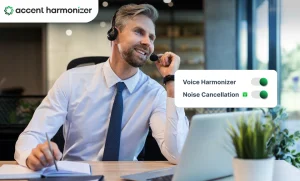
Accent Harmonizer supports a fairer environment by helping multilingual speakers communicate more clearly without altering identity, tone, or personality. Technology focuses on intelligibility in real time, allowing listeners to follow conversations with less effort. When speech is easier to process, evaluators can focus on substance over delivery, and speakers can express themselves with greater confidence.
If your organization is working toward fairer, more consistent communication across hiring, promotion, and evaluation cycles, clearer speech can support that mission. Accent Harmonizer provides real-time clarity enhancement that keeps each speaker’s natural voice intact while making conversations easier for listeners to interpret.
It can be added to interview processes, used in manager-employee discussions, or integrated into communication tools for global teams—without requiring workflow changes or voice restructuring.
Book a Demo to explore how Accent Harmonizer can support clearer, more confident communication across your HR and talent evaluation workflows.