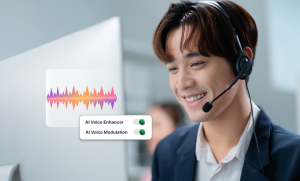

As global contact centers continue to expand their distributed teams, accent-based communication barriers have escalated. This issue is far more costly than most executives realize. Internal analysis and industry reports indicate that conversational misunderstandings due to accent friction, contribute to over $15 billion industry-wide losses annually. The traditional solutions like basic noise suppression and time-consuming accent neutralization training are not working as expected. Traditional accent neutralization training can take 6–12 weeks before agents are considered ‘floor-ready,’ a cost that often exceeds the agent’s first-year salary. Instead, AI accent localization technology for improving the Customer Experience (CX) stack. Unlike previous tools, AI localization uses advanced Speech-to-Speech (S2S) Neural Networks to adapt an agent’s speech in real-time. It’s predicted that Generative AI tools will be used by 80% of customer service and support organizations by the end of 2025. By mastering the integration of AI accent localization, forward-thinking organizations can turn a long-standing operational bottleneck into a competitive advantage, delivering truly equitable and frictionless service across all global markets.
Why AI Accent Localization Is Becoming a Priority for Global Contact Centers?
For decades, contact centers addressed communication gaps with two methods:
- Basic Noise and Echo Suppression: These tools only address audio quality (e.g., background chatter, echo) and do nothing to solve issues of accent. They clean the channel but leave the core communication problem untouched.
- Manual Accent Neutralization Training: It involves costly, intensive coaching for agents to mimic a target accent. This approach often leads to agent burnout, higher attrition, and can result in speech that sounds robotic or disingenuous to the customer. Critically, it focuses on eliminating identity rather than enhancing clarity, and it fails to scale across a globally diverse workforce.
Modern AI accent localization tools are built to solve a technical problem (clarity).
What AI Accent Localization Actually Does?
Real-time accent localization uses sophisticated Speech-to-Speech (S2S) Translation models. The technology processing the agent’s speech through a multi-stage deep neural network pipeline:
- Source Speech Encoding: The agent’s voice input is immediately converted into a digital representation
- Feature Disentanglement: The neural network intelligently separates the core linguistic content (the words spoken) from the paralinguistic features (the unique accent, pitch, and prosody of the speaker).
- Accent Modification: The model then synthesizes the original words using the required target accent profile
- Real-time Output: The resulting audio is synthesized back into a clear, adapted voice stream and streamed to the customer.
Crucially, this architecture ensures that the agent’s emotional expression and unique voice identity are maintained. Additionally, it makes conversation feel personal and genuine, which is a key driver of positive CX.
Key Advantages Multilingual Conversational AI for Contact Centers and BPOs
AI accent solutions for call centers deliver measurable improvements across multiple channels. They include:
- Customer Experience (CX) Gains: Higher comprehension between agents and customers reduces friction caused by accent mismatches. Early adopters report CSAT scores rising by 18-25 points, particularly in offshore or multilingual service queues. Also, FCR rates are seen to improve by 15-20%, reducing costly follow-up calls and customer frustration.
- Operational Efficiency: Call resolution speeds improve as repetition rates drop with multilingual conversational AI. With AI, organizations report a consistent Average Handle Time (AHT) reduction. Moreover, contact centers can shorten the time it takes for new agents to be “floor-ready” by 30–40%. It leads to massive savings on training overhead (which can cost $2K–$5K per agent).
- Agent Experience: The technology serves as a powerful agent retention tool to boost agent confidence and morale. Agents no longer fear customer confusion, impatience, or unconscious bias related to their accent. This reduced anxiety leads to 67% of agents reporting lower communication anxiety and higher job satisfaction.
Implementation AI Accent Localization in Five Strategic Steps
Successful deployment of AI accent localization requires a structured approach. Skipping any of the following steps can risk friction and low adoption.
Step 1: Accent Audit and Business Case Prioritization
Before deploying AI accent solutions for call centers, use your existing Speech Analytics (SA) platforms to pinpoint the precise sources of friction.
- Data Collection: Analyze call transcripts and sentiment scores to identify the specific geographic regions and common source accents that exhibit the highest rates of repetition, transfer, and negative sentiment.
- Targeted Use Case Selection: Begin the pilot in the area that yields the fastest ROI.
- High-Friction Area: Technical Support or complex, multi-step transactions.
- Strategic Area: Offshore BPO delivery in a new or expanding market.
- Quick-Win Area: Low-volume, high-value sales or retention queues.
Step 2: Architecture Selection and Pilot Launch
| Deployment Model | Best For | Pros | Cons |
|---|---|---|---|
| Client-Side (Agent Desktop App) | Small-to-Mid-Sized Operations, Rapid Pilots | Quickest setup, simple user management, often leverages existing desktop resources. | Performance can be dependent on agent’s PC specs; less centralized control. |
| Server-Side (CCaaS API Integration) | Enterprise BPOs, High Volume, Centralized QA | Guaranteed, Uniform Quality across all agents; centralized control and compliance; ideal for large-scale operations. | Requires deeper integration with your CCaaS/VoIP platform; potentially higher latency risk if not optimized. |
Run the pilot for 30–60 days on a subset of 50–100 agents, strictly tracking AHT, CSAT, and agent self-reported confidence scores before and after activation.
Step 3: Change Management: Secure Agent Buy-In
This technology must work as a tool that reduces agent stress and eliminates customer bias. Lack of agent acceptance is one of the biggest threats to multilingual conversational AI adoption.
Step 4: Integration with the Existing Tech Stack
AI localization must integrate seamlessly within your core Customer Experience (CX) infrastructure. The integration primarily occurs via telephony, allowing the S2S processing to happen inline within the call path. Also, ensure the clear output of the localization engine share data with the AI systems, improving their accuracy and overall automation success.
Step 5: Scale and Continuous Monitoring
Once ROI is validated, scale the solution enterprise-wide and establish continuous quality assurance.
- Build Executive Dashboards: Track Accent-Related Repetitions and Silence Time as real-time leading indicators.
- Establish a Feedback Loop: Continuously gather agent and QA feedback to report back to the vendor for model refinement and tuning specific to your unique accent pairs.
Conclusion
AI accent localization is a core piece of modern Customer Experience (CX) infrastructure. It assists global contact centers approach manage diversity, talent, and service quality. The technology addresses the rising demand for frictionless service across diverse markets and resolves a major demand for uniform communication. The AI accent solutions for call centers enhances agent’s natural speech patterns and optimizes clarity. This allows organizations to hire the best talent based on skill and knowledge without imposing cultural or linguistic barriers.
Ready to See the ROI? Schedule Your Personalized Demo.
See how AI accent localization performs against your specific operational challenges with Accent Harmonizer. Let’s schedule a demo to know more.