
Escalations in customer conversations are often treated as operational failures. For instance a call went too long or the policy wasn’t accepted. But in many cases, escalation does not begin with the wrong answer. It begins much earlier—when the customer stops believing they are being understood.
In global contact centers, accent-related misunderstandings can quietly shift how intent is perceived. What starts as a moment of clarification can feel, to the customer, like indifference. And once that perception forms, even correct information can fail to resolve the interaction.
Escalation Rarely Starts with the Wrong Answer
When customers feel uncertain about whether they are being heard, the interaction begins to feel unstable. Most contact center leaders have seen this pattern:
- The agent follows policy correctly
- The information shared is accurate
- The process is technically sound
Yet the customer still asks to speak to a supervisor.
Why Are Escalations Emotional Before They Are Operational?
Customer escalations are often framed as logical disagreements. They are emotional responses to ambiguity.
Before a customer questions policy, they question intent.
They ask themselves:
- “Are they listening to me?”
- “Do they understand what I’m saying?”
- “Am I being taken seriously?”
When those questions remain unanswered, emotional tension rises. The customer may not consciously articulate this discomfort, but it shapes how every response is interpreted.
At that point, escalation becomes less about solving a problem and more about restoring confidence in the interaction.
Where Accent Issues Quietly Enter the Conversation?
Accent diversity is a natural outcome of global contact center operations. It reflects multilingual talent, distributed teams, and global service delivery models. The challenge lies in how spoken communication is processed in real time.
Accents influence:
- pronunciation patterns
- pacing and rhythm
- emphasis on syllables
- timing of pauses
None of these affect the correctness of what is said. But they can affect how easily meaning is received, when the listener is under stress, multitasking, or emotionally invested in the outcome of the call.
How Misunderstanding Becomes Misinterpreted as Indifference?
Here are some instances where misunderstanding causes communication breakdown in customer service:
Repetition Begins to Feel Like Avoidance
When a customer repeats themselves, they are usually seeking a “verbal nod” or confirmation: “You understand what I mean, right?”
- The Intent: The agent asks clarifying questions—often appropriately—to ensure alignment.
- Perception: To the customer, these questions feel like deflection. If the agent doesn’t first validate what was heard, the customer stops trying to solve the problem and starts trying to “defend” their point. At this stage, the customer stops seeing a partner and starts seeing a barrier.
The Weight of “Dead Air”
Accent-related processing often introduces brief pauses as agents ensure accuracy before speaking.
- The Reality: These are moments of high-focus processing for the agent.
- Customer Experience: In the absence of sound, the customer fills the void with negative assumptions. Research shows that as little as 5 seconds of “Dead Air” can be misread as hesitation, reluctance, or even incompetence. Silence becomes meaningful. The customer’s internal dialogue whispers: “They aren’t answering because they don’t want to help me.”
“Transactional” Wall
As tension builds, agents naturally lean on “neutral” or professional phrasing to stay safe.
- The Friction: Phrases like “What I’m trying to understand is…” or “Could you please repeat that?” sound like curious inquiry to the agent.
- The Impact: When clarity is already fragile, these sound scripted and impersonal.
- Conclusion: The customer no longer hears a human trying to help; they hear a transactional distance. Customer decides the agent doesn’t care. Once they believe you are indifferent, no amount of technical accuracy will de-escalate the call.
Why Conversations Escalate Even When the Agent Is “Right”?
This is where traditional escalation models fail. From a systems perspective, the agent may have followed every protocol correctly—yet the call still fails.
- Validation Pivot: Once a customer feels misunderstood, the conversation stops being about information and starts being about validation.
- Fact vs. Feeling Gap: The customer isn’t escalating to get a different answer; they are escalating to get an acknowledgment.
- “Broken Record” Loop: This is why repeating the same (correct) explanation fails. The customer isn’t asking for new facts—they are asking for assurance that their concern has “landed.”
Clarity During Conversation Matters More Than Correction After
Post-call improvements are valuable, but perception is built real time. Clarity stabilizes conversations before emotion accelerates. When understanding flows naturally, customers rarely stop to question intent. They stay focused on resolutions.
Correction after misunderstanding has already occurred is significantly harder. Once callers assume indifference, agents need to rebuild trust and fix misunderstanding. This is why preventing misunderstanding is often more effective than repairing it.
Accent Harmonization Supports De-escalation Without Changing Accent
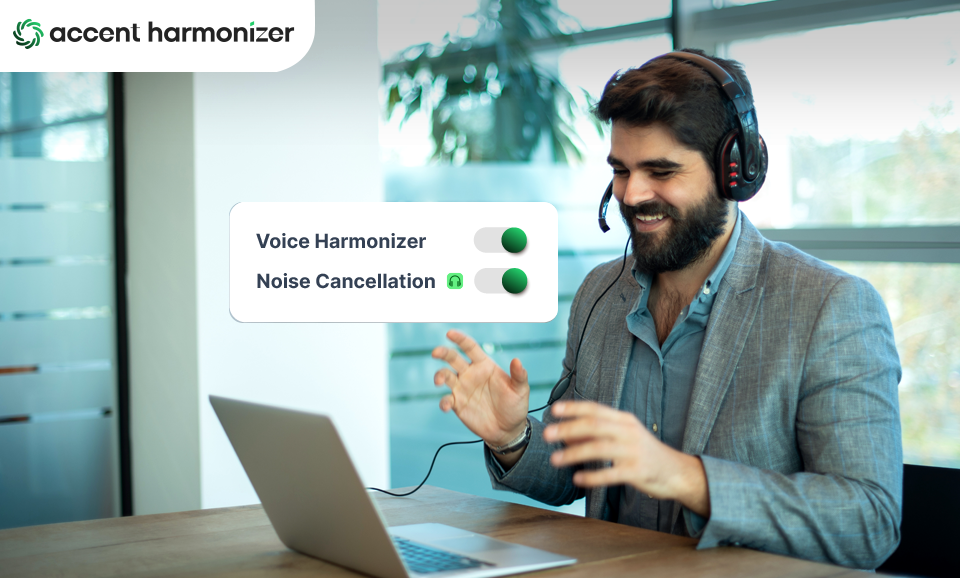
Accent harmonization approaches focus on improving intelligibility during live conversations without altering the agent’s voice or tone. The accent reduction tool supports online harmonization to aligns pronunciation patterns and improve comprehension. Harmonization helps prevent the perception gaps that can otherwise trigger emotional escalation.
Accent Harmonizer by Omind supports clear understanding during conversations.
Thoughtful Next Step
Understanding why conversations escalate is one thing. Observing how clarity influences live interactions is another.
For teams exploring ways to reduce escalation without changing how agents speak or behave, it can be useful to see how real-time accent harmonization supports clearer customer conversations in practice.
Schedule a walkthrough to know more.