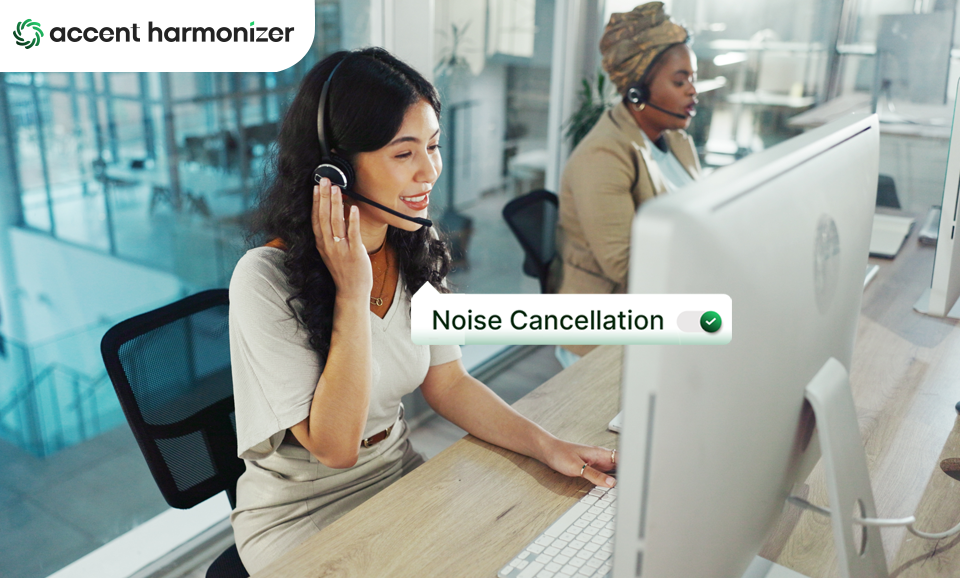
E-commerce brands spend millions optimizing checkout journeys, shipping speed, and post-purchase automation. But when customers finally call support about a failed delivery, damaged order, or missing refund, the conversation itself often becomes the biggest source of friction.
The issue usually is not agent professionalism. It is speech comprehension under pressure. Misheard apartment numbers, repeated tracking IDs, and clarification loops quietly increase handle times, queue pressure, and customer exhaustion across global retail support operations. Real-time accent harmonization e-commerce software is emerging as a new operational layer designed to reduce that friction during live conversations.
Why E-Commerce Support Calls Fail Faster Than Digital Experiences?
Online retail brands build beautifully smooth digital checkouts. Yet, their voice support channels frequently feel painfully disconnected from that smooth experience. When a digital transaction glitches, a consumer handles it by refreshing the page or waiting.
Voice interactions do not have that luxury because they happen in real time. Retail support calls are uniquely fragile due to emotional urgency and the need for absolute verbal precision. Furthermore, customers often call from noisy mobile-call environments while multitasking or walking.
Because of these chaotic conditions, a hidden operational tax builds up during the conversation. We call this phenomenon “comprehension fatigue.” Consumers will tolerate a slow shipping window much longer than they will tolerate an exhausting, repetitive conversation with an agent.
Customers Usually Call After Trust Has Already Been Damaged
Retail queues are highly sensitive to small conversation friction points. Shoppers rarely dial into a retail contact center to say thank you. Instead, they call because a package is missing, a refund failed, or subscription billing looks wrong. It means customers enter conversations already frustrated, so their patience threshold is incredibly low before the agent even speaks.
Why Verbal Misunderstanding Feels Worse Than App Friction?
When an agent mishears a detail, the misunderstanding feels intensely personal. Repeating information multiple times increases emotional exhaustion rapidly, and customers often interpret communication difficulty as operational incompetence. Retail operations can protect razor-thin margins by reducing contact center repetition with real-time speech intelligence for seasonal agents.
New Retail CX Problem: Comprehension Fatigue
Comprehension fatigue occurs when listener fatigue pairs with repeated clarification cycles to cause a complete conversational breakdown. For example, restating alphanumeric tracking codes or clarifying refund values over a poor connection drains customer patience.
The Hidden Operational Cost of Repetition Loops in Retail Support
Verbal misunderstandings do not just irritate buyers. They create concrete financial damage by initiating costly clarification cascades across your entire queue. When agents repeat themselves, average handle time (AHT) balloons, callback rates spike, and escalations climb.
The Retail Details Most Frequently Misheard During Calls
Certain critical pieces of data are acoustically fragile during live calls. Apartment numbers, ZIP codes, SKU references, promo codes, and refund amounts contain short, sharp consonant sounds. These sounds degrade instantly over standard telecom lines, forcing constant repetition.
How One Misheard Address Creates Multiple Operational Costs?
A single misheard address triggers an expensive chain reaction. The package is sent to the wrong unit, which causes a delivery failure. Next, operations must trigger a replacement shipment and handle a new refund dispute. Finally, this mess generates multiple unnecessary inbound calls.
Why Peak Retail Seasons Magnify Communication Friction?
During major holiday spikes or flash-sale events, call centers face massive queue sensitivity. When volume pressure rises, speech fatigue compounds for the agent. Consequently, minor verbal delays that take twenty seconds can completely paralyze a tightly scheduled queue.
The Cognitive Load Problem Inside Retail Contact Centers
Processing speech under continuous pressure creates extreme mental fatigue for support representatives. Constant clarification requirements compound agent burnout much faster than heavy call volumes alone. Therefore, solving speech clarity directly protects your frontline workforce from early turnover.
How Real-Time Accent Harmonization Works During Live Retail Conversations?
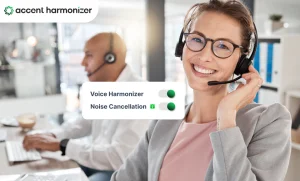
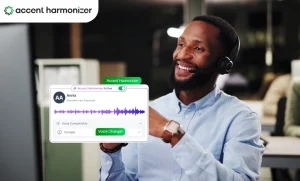
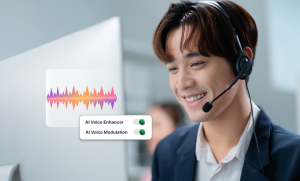
To fix these breakdowns, customer experience teams need technology that targets the actual physics of speech. Real-time accent harmonization software for e-commerce systems use low-latency audio processing to optimize phonetic refinement and improve speech intelligibility.
Crucially, this architecture does not rely on artificial voice cloning, nor does it employ scripted robotic speech. It does not erase an individual’s identity or cultural accent. Instead, the software smooths out specific acoustic friction points that cause listeners to mishear consonants and vowels.
What Happens During a Live Support Interaction?
The system acts as an instantaneous translator for clarity, operating entirely in the background.
- The customer service agent speaks naturally into their microphone.
- The speech AI analyzes phonetic patterns within milliseconds.
- The software identifies high-friction phonetic elements that threaten clarity.
- The audio is dynamically refined to maximize listener comprehension.
- The customer hears clearer, crisper speech on their end in real time.
Why Speech Intelligibility Matters More Than “Accent Neutrality”?
The traditional goal of accent elimination is outdated and operationally flawed. The real objective is reducing misunderstanding probability to boost conversational continuity and comprehension speed. Brands need their agents to be easily understood, not stripped of their unique voices.
| Accent Harmonization vs Noise Cancellation vs Voice Synthesis | ||
|---|---|---|
| Technology | Primary Function | Operational Impact |
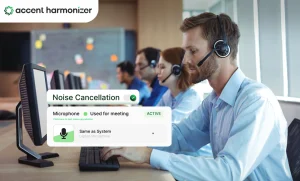
| Noise Cancellation | Removes background interference | Dampens ambient office or street noise |
| Voice Synthesis | Generates artificial speech | Replaces the human voice completely |
| Accent Harmonization | Improves real-time comprehension | Optimizes phonetic clarity during live speech |
Conclusion
Retail support conversations fail in small, quiet moments first. A misheard tracking digit or a repeated apartment number might seem minor on a single call. However, when multiplied across thousands of daily interactions, these minor friction points compound into massive operational bottlenecks, ballooning handle times, and fractured customer trust.
Real-time accent harmonization offers a scalable path forward. By treating speech clarity as essential infrastructure rather than an employee performance issue and retail brands. It eliminates repetition loops while preserving the authenticity of their global workforce. True operational efficiency does not require robotic scripts or cosmetic voice alterations—it simply requires making sure your agents and customers can understand each other the very first time.
Maximize Your Support Queue Efficiency
Don’t let phonetic friction drive up your average handle times during critical retail spikes.
Book a demo to hear how speech intelligibility AI works during ecommerce support calls.