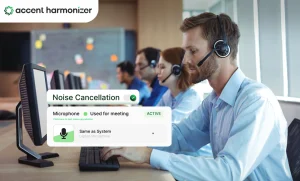

Insurance call centers process some of the most detail-sensitive conversations in the outsourcing industry. Policy numbers, claim reference codes, coverage amounts, deductible structures, and date-specific information flow through every interaction. When accent differences create comprehension friction during these exchanges, the consequences extend far beyond longer call times.
A misheard policy number triggers a claim filed against the wrong account. A misunderstood coverage limit leads to an inaccurate benefits explanation. A loss recorded incorrectly delays the entire adjudication process. These are not edge cases. In high-volume insurance BPOs processing thousands of calls daily, accent-related miscommunication generates a steady stream of rework, complaints, and compliance risk that traditional quality monitoring often fails to trace back to its root cause.
The insurance vertical compounds this challenge because callers are frequently under stress. Policyholders calling about a denied claim, a weather-related loss, or a medical billing dispute are already emotionally elevated. Add accent-related comprehension difficulty, and the interaction quickly deteriorates into frustration, repeat explanations, and escalation requests.
Why Traditional Accent Training Falls Short for Insurance Programs?
Insurance BPOs have historically addressed accent challenges through classroom-based training programs, pronunciation coaching, and scripted response frameworks. These approaches have limitations that become more visible at scale.
The Structural Failure of Manual Coaching
Historically, insurance BPOs have relied on classroom coaching and scripted frameworks. However, these methods face a “leaky bucket” problem: with agent attrition averaging 30–60% annually, organizations rarely recover their training investment before an agent exits. New hires enter a continuous training pipeline that can never fully catch up with operational demand.
Phonetics Over Scripts
While scripts standardize what is said, they don’t fix how it sounds. Unclear pronunciation of critical terms—like deductible, effective date, or co-insurance—renders even the best script useless. Accent friction is a speech delivery problem, not a content problem.
The Real-Time Solution
Accent harmonization moves the fix from the agent’s behavior to the audio stream itself. By applying phoneme-level adjustments in real-time, the technology ensures clarity while keeping the agent’s natural tone and emotional register intact.
| Legacy Training vs. Real-Time Accent Harmonization | ||
|---|---|---|
| Solution Type | Structural Limitations | Business Impact & ROI |
| Classroom Training & Coaching |
|
|
| Scripted Response Frameworks |
|
|
| Accent Harmonizer (Real-Time) |
|
|
Critical Insurance Call Scenarios Where Voice Clarity Matters Most
Certain interaction types in insurance operations are especially vulnerable to accent-related errors. First Notice of Loss (FNOL) calls require precise documentation of dates, locations, involved parties, and damage descriptions. Errors introduced at this stage persist through the entire claims lifecycle and are expensive to correct downstream.
Benefits verification and eligibility calls involve communicating complex numerical information including plan codes, group numbers, co-pay structures, and out-of-pocket maximums. These data points contain alphanumeric sequences where a single misheard character creates processing failures.
Premium payment and billing inquiries require agents to communicate dollar amounts, due dates, and payment allocation details. Miscommunication in these conversations directly impacts policyholder trust and can trigger unnecessary payment disputes.
Regulatory disclosure calls, where agents must communicate policyholder rights, appeal procedures, and cancellation terms, carry compliance implications. Regulators increasingly expect not just that disclosures were delivered, but that they were delivered clearly enough to be understood. Accent harmonization strengthens the organization’s position on this emerging compliance standard.
| Enterprise FNOL Data Accuracy Checklist | ||
|---|---|---|
| Status | Data Point | Validation Protocol & AI QMS Impact |
| Alphanumeric Policy IDs |
| |
| Date of Loss (DOL) |
| |
| VIN & License Plates |
| |
| Co-pay/Deductible Figures |
| |
Measurable Outcomes for Insurance Contact Centers
Insurance BPOs deploying real-time accent harmonization technology have documented improvements across the metrics that matter most to carrier clients. AHT reductions of 8 to 11 percent are driven primarily by eliminating repetition cycles during data capture and verification segments of calls.
FCR improvements of 12 to 15 percent result from policyholders correctly understanding next steps, required documentation, and timeline expectations on the first call. Fewer callbacks reduce queue pressure and improve agent utilization rates across the operation.
Quality compliance scores improve because call reviewers find fewer instances of miscommunication that could be interpreted as inadequate disclosure. For insurance programs subject to state-level regulatory audits, this creates a clearer compliance record.
Agent satisfaction and retention also benefit. Insurance agents who are frequently misunderstood experience higher stress levels and cognitive fatigue. Reducing the frequency of these interactions through voice clarity technology contributes to lower attrition, which is one of the most expensive operational challenges in offshore insurance BPOs.
Voice Clarity as Insurance BPO Infrastructure
The insurance industry’s trajectory points toward increasing regulatory scrutiny of customer communication quality, rising consumer expectations shaped by digital-first experiences, and continued reliance on offshore delivery models that introduce accent diversity into the agent population.
Accent harmonization is not a cosmetic enhancement for insurance call centers. It is operational infrastructure that reduces errors, accelerates resolution, improves compliance posture, and protects the carrier’s brand during the interactions that matter most to policyholders.
For insurance BPO leaders evaluating this technology, the deployment model is designed for minimal disruption. The solution integrates at the voice layer of the existing telephony stack, requires no changes to agent workflows, and begins delivering measurable results within the first month of deployment.
Get Started with New Audio Technology
Accent Harmonizer by Omind is purpose-built for high-stakes insurance environments where every misheard digit carries real consequences. Explore how real-time voice clarity can transform your insurance operations.