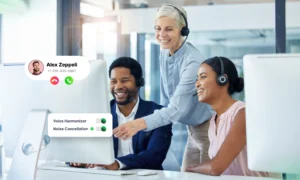
Most organizations do not start by looking for accent adaptation software. Instead, they start by noticing operational symptoms. For example, customers frequently ask agents to repeat themselves. Consequently, call durations stretch longer than expected. Managers notice sudden supervisor escalations during otherwise routine conversations.
Because of these friction points, customer satisfaction scores drop across teams handling similar issues. As organizations investigate these patterns, they often discover that communication friction is contributing to the problem. Specifically, the issue is not agent capability. Accent adaptation software fixes those hidden gaps.
What Is Accent Adaptation Software?
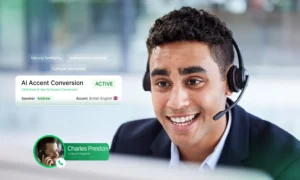
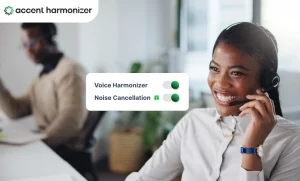
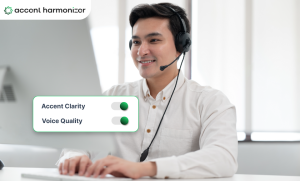
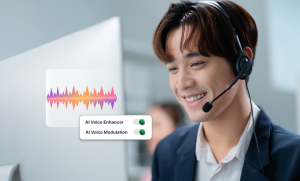
The accent adaptation technology modifies speech audio during live calls. It adjusts specific phonetic patterns in real time. Therefore, the listener hears a more familiar cadence.
How It Differs from Accent Neutralization Training?
Traditional training forces agents to change how they speak. Conversely, software alters the audio output dynamically. The agent speaks naturally, while the technology handles heavy lifting. Global delivery centers deploy this software to assists offshore teams handling inbound customer support.
Brands need to protect customer satisfaction metrics. Because hiring costs are rising, enterprises cannot afford long training cycles. This software offers an immediate operational fix.
Why Buyers Use Different Terms for the Same Category?
- Accent Adaptation Software: This term focuses on alignment. It matches the speaker’s voice to the listener’s expectations.
- Accent Neutralization Software: An older term that implies flattening a voice. Buyers often use it when searching for legacy training replacements.
- Accent Translation Software: Some procurement teams use this phrase mistakenly. However, the software does not translate languages; it adjusts phonetic delivery.
- Accent Conversion Software: A technical term used by engineers. It describes the mathematical shift of audio frequencies.
- Accent Harmonization Software: A marketing term used to emphasize natural blending. It implies a smooth acoustic balance.
| Category Term | Intended Goal | Typical Use Case | Common Limitation |
|---|---|---|---|
| Adaptation Software | Improve comprehension | Live BPO voice support | Needs low latency |
| Neutralization Training | Alter human speech | Onboarding programs | High agent attrition |
| Conversion Tools | Shift audio waves | Automated voice systems | Can sound synthetic |
What Causes Communication Friction in Contact Centers?
- Repeat Requests and Clarification Loops: When a customer misses a word, the conversation stalls. “Can you repeat that?” becomes a common phrase. Consequently, these loops waste valuable seconds on every single call.
- Escalations Triggered by Misunderstanding: Frustration builds quickly when clear communication breaks down. Therefore, customers demand to speak with a supervisor. These escalations occur even when the agent has the correct technical answer.
- Extended Average Handle Time: Friction directly inflates operational costs. Because agents spend time clarifying basic details, average handle time rises. This slowdown reduces total center capacity.
- Inconsistent First Contact Resolution: Misunderstandings lead to wrong notes and incorrect fixes. Consequently, customers call back to resolve the same issue. First contact resolution rates drop as a result.
- Customer Effort During Conversations: Customers want quick, painless interactions. When they must strain to understand an agent, customer effort scores worsen. This strain damages long-term brand loyalty.
How Accent Adaptation Software Works During Live Calls?
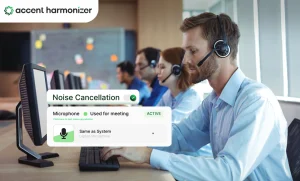
- Real-Time Speech Processing: The software intercepts the audio signal instantly. Specifically, it processes sound waves as the agent speaks into their microphone.
- Speech Pattern Alignment: Mathematical models adjust the phonetic properties. For example, the software modifies vowel elongation and consonant emphasis to match the listener’s profile.
- Preserving Voice Identity and Emotional Tone: The technology does not create a robotic replacement. Instead, it maintains the agent’s unique pitch and emotional warmth. Empathy remains fully intact.
- Latency Requirements in Live Customer Conversations: Delayed audio destroys natural conversation. If the processing takes too long, speakers step on each other’s words. Therefore, speed is paramount.
Human ears notice delays above one-quarter of a second. Consequently, systems must process audio in under 200 milliseconds to keep conversations fluid. AI call clarity solution addresses the cognitive side of listening directly, outperforming standard high-frequency noise-damping options.
Why Traditional Accent Neutralization Training Struggles to Scale?
- Long Training Cycles: Classroom training takes weeks to show results. Furthermore, this delay slows down your production timeline.
- Variable Learning Outcomes: Every individual learns at a different pace. Consequently, some agents improve quickly, while others struggle to master new speech habits.
- Coaching Dependency: Human training requires constant supervisor reinforcement. When coaches stop monitoring, agents often revert to their native speech habits.
- Hiring and Onboarding Constraints: Strict speech requirements shrink your available talent pool. By removing these strict requirements, you can hire empathy and technical skills instead.
Conclusion
Organizations rarely search for accent adaptation software because they want to change how agents sound. Instead, they search because customer conversations are becoming less efficient.
An AI-powered accent harmonizer resolves underlying issues causing conversational friction. It focuses on speech adaptation capabilities and enhancing supports customer understanding. Additionally, the technology enhances operational performance, and deployment requirements of a contact center on a scale.
Want to eliminate conversational friction in your global contact centers?
Contact our infrastructure experts to schedule a technical architecture review and see how our low-latency audio layer integrates with your existing CCaaS platform.