Many contact centers assume communication problems are caused by poor audio quality. Therefore, they invest heavily in better headsets, noise cancellation tools, and audio optimization software. Yet, customers still ask agents to repeat themselves constantly. Consequently, calls still run longer than expected, and escalations still occur during otherwise straightforward conversations.
The core issue is that clear audio and clear understanding are not the same thing. AI call clarity solution helps reduce communication friction during live conversations.
Customers Still Struggle to Understand Contact Center Conversations
When an agent speaks clearly into a high-quality microphone, the signal is technically perfect. However, perfection in transmission does not guarantee comprehension. For instance, accents, speaking speed, and background chatter still distort the meaning. Because of this gap, customers frequently miss key details despite a static-free line.
Understanding vs Hearing
Hearing is purely physical, whereas understanding is cognitive. Therefore, your customers might hear every syllable without absorbing the actual message. If an agent has an unfamiliar accent or speaks too quickly, the customer must expend extra mental energy. Consequently, this cognitive load slows down the conversation and frustrates the caller.
Why Speech Intelligibility Matters in Customer Service?
Speech intelligibility measures how easily a listener recognizes words. In contact centers, high intelligibility directly correlates with faster issue resolution. Specifically, when customers grasp information on the first try, they feel more confident. Conversely, low intelligibility forces agents to repeat instructions, which damages trust.
Clear Audio vs Clear Understanding: The Difference Most Teams Miss
You can provide your team with enterprise-grade fiber networks and premium headsets. Yet, these hardware upgrades only fix background static. If the underlying speech remains difficult to process, your metrics will not improve. Therefore, leaders must look beyond hardware to find real answers.
Why do Customers Ask Agents to Repeat Information?
Customers ask for repetition because their brains are working too hard to decode the sounds. For instance, a customer might hear a word but fail to match it to their vocabulary immediately. Because the conversation moves forward rapidly, they fall behind. Consequently, they interrupt the agent to reset the dialogue.
Speech Clarity, Accent Familiarity, and Processing Effort
Human brains naturally struggle to process unfamiliar speech patterns under stress. When a customer calls with an urgent billing issue, their anxiety is already high. If they encounter an unfamiliar accent, their processing effort spikes. Thus, an ai call clarity solution becomes necessary to bridge the phonetic gap in real time.
Signs Communication Friction Is Affecting Contact Center Performance
- Repeat Requests During Calls: The most obvious sign of friction is the constant phrase, “Can you repeat that?” If your call recordings contain this phrase frequently, you have an intelligibility problem. Specifically, look at how often agents must re-state numbers or names.
- Escalations Caused by Misunderstanding: Sometimes, simple misunderstandings spiral into formal complaints. For example, a customer might mishear a policy detail or a pricing structure. Because they feel misled, they demand to speak with a supervisor. Consequently, supervisor queues fill with avoidable disputes.
- Rising Average Handle Time: When agents must repeat themselves, calls naturally take longer. For instance, adding just three clarification loops can extend a call by two minutes. Therefore, rising handle times often point directly to conversational friction rather than agent inefficiency.
- Inconsistent First Contact Resolution: If a customer mishears instructions, they will execute them incorrectly at home. Consequently, they will call back tomorrow to fix the new issue. This pattern destroys your first contact resolution rates and inflates overall call volume.
What’s the Difference between Voice Clarity, Speech Enhancement, Noise Cancellation, and Accent Adaptation?
- Voice Clarity Software: Traditional voice clarity software alters the pitch or tone of a speaker. Specifically, it boosts high frequencies to make human speech sound crisper. While this helps with muffled audio, it does not alter word pronunciation or accent delivery.
- Speech Enhancement Software: Speech enhancement software focuses on separating the main speaker from ambient noise. For example, it amplifies the agent’s voice while dampening background murmurs. However, it cannot fix clarity issues caused by fast speech rates or heavy accents.
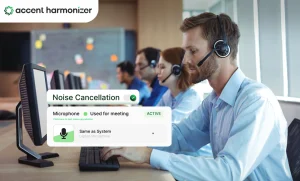
- Noise Cancellation Software: Noise cancellation tools block external sounds like barking dogs or keyboard clicks. They are excellent for open office environments. Nevertheless, they do nothing to improve the actual intelligibility of the words spoken by the agent.
- Accent Adaptation Software: This specific technology modifies speech patterns in real time to match the listener’s native ear. Because it addresses the cognitive side of listening, it directly improves comprehension. It allows global teams to speak naturally while ensuring local customers understand perfectly.
Where does AI Call Clarity Solutions Fit?
An AI call clarity solution combines elements of speech enhancement with real-time intelligibility adjustment. Consequently, it removes both environmental noise and phonetic barriers simultaneously. This hybrid approach ensures that clear audio finally translates into clear understanding.
| Audio Quality vs. Speech Adaptation Technologies | |||
|---|---|---|---|
| Category | Primary Goal | Problem Addressed | Typical Limitation |
| Voice Clarity Software | Boost voice crispness | Muffled digital audio | Does not improve accent understanding |
| Speech Enhancement | Isolate human speech | Audio signal degradation | Cannot slow down rapid speech patterns |
| Noise Cancellation | Remove ambient sounds | Background office noise | Leaves the original speech unchanged |
| Accent Adaptation | Align speech patterns | Cognitive listening strain | Requires real-time processing power |
Operations teams looking to optimize live queues must recognize that eliminating comprehension gaps in live enterprise environments directly drives down handle times.
How AI Call Clarity Solutions Improve Conversational Understanding?
- Real-Time Speech Processing: Modern software processes audio within milliseconds. Specifically, the system analyzes the incoming voice stream, optimizes the phonemes, and outputs a clearer version. Because this happens instantly, neither the agent nor the customer notices any delay.
- Speech Intelligibility Enhancement: The core engine modifies specific frequencies that define consonant sounds. For instance, sounds like “p,” “t,” and “b” often get lost over digital telephone lines. By sharpening these specific triggers, the system makes every word distinct.
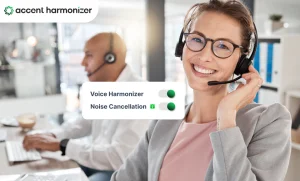
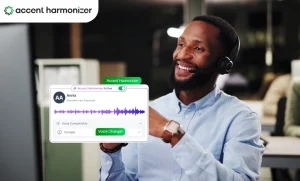
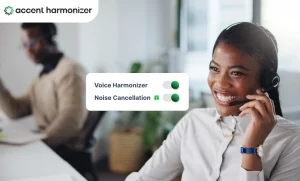
- Accent Harmonizer Technology and Voice Clarity: AI call clarity solution works best when it acts as an intelligent accent harmonizer. The system analyzes the agent’s spoken syllables and gently shifts the acoustic properties to match the customer’s native speech expectations. Because this happens seamlessly in the cloud, it preserves the agent’s natural confidence while giving the customer immediate clarity.
- Preserving Voice Identity: An effective system must not make agents sound like robots. Instead, it preserves the unique tone, emotion, and identity of the speaker. Consequently, the human connection remains entirely intact while clarity improves.
Why Traditional Approaches Struggle to Improve Call Clarity at Scale?
- Agent Coaching: Coaching programs require significant time and continuous reinforcement. Furthermore, human speech habits are deeply ingrained and incredibly difficult to alter permanently. Consequently, coaching rarely delivers uniform results across large, global teams.
- Accent Neutralization Training: Many centers historically used accent neutralization training. However, this practice places an unfair burden on agents and often hurts morale. Because it takes months to show results, it is highly inefficient compared to software adjustments.
- Hardware Upgrades: Buying expensive headsets is a common reflex for operations leaders. Yet, hardware upgrades cannot fix software compression or cognitive processing gaps. Therefore, organizations often spend thousands of dollars only to see their metrics remain completely flat.
- Noise Suppression Alone: Basic noise suppression cleans up the background environment but leaves the voice unchanged. If the agent’s natural speaking pace is too fast, the customer will still struggle. Thus, noise removal is only half the battle.
- Manual Quality Assurance Programs: Manual QA teams can only review a tiny fraction of total calls. Because they cannot evaluate every interaction, their feedback is often subjective and delayed. Consequently, manual programs cannot drive real-time improvements on a scale. Enterprise teams looking to solve comprehension breakdowns should evaluate enterprise AI voice clarity software that operates directly within live telephony streams.
Conclusion
Most contact centers assume communication challenges begin with poor audio quality. Many communication problems persist even when calls are technically clear. The core issue is understanding. AI call clarity solution should therefore focus entirely on conversational outcomes like:
- reduced repetition
- fewer escalations
- lower communication friction
Ready to fix conversational friction in your contact center?
Contact our enterprise technology team today to schedule a live demonstration of our speech intelligibility platform and see how we reduce average time across global teams.