A customer does not fail KYC because the regulation is unclear. They fail because an agent mishears “fifteen” as “fifty,” types the wrong birth year, and the system kicks the application into a manual review queue. Digital onboarding looks seamless in product demos. However, in the real world, it falls apart during the live KYC verification call.
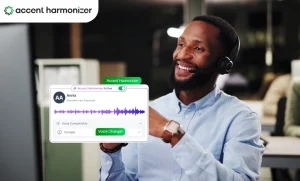
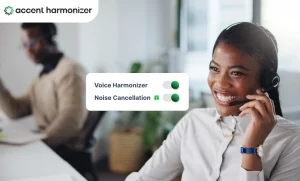
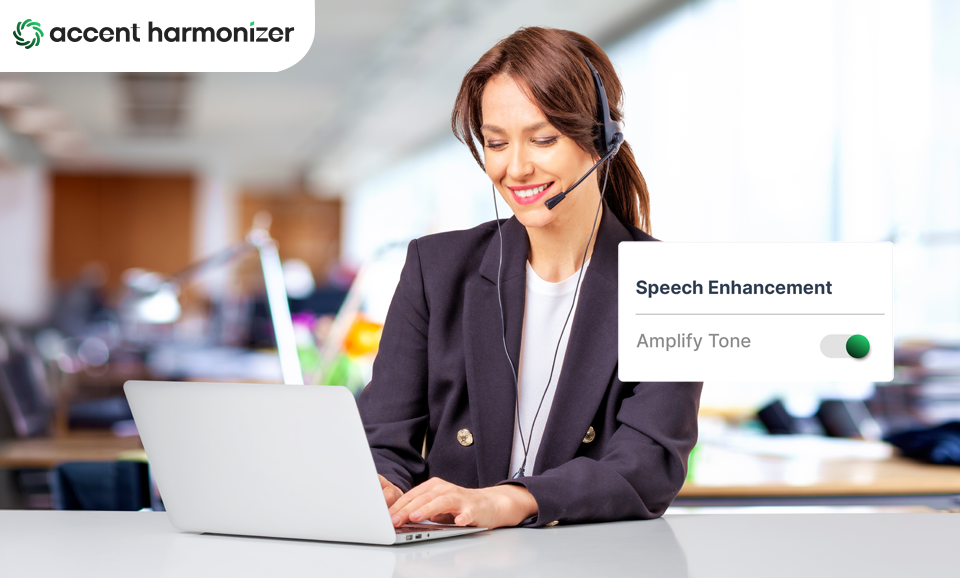
This post explains exactly where verification calls break, why accent friction is the structural cause most fintech teams misdiagnose, and how an AI accent harmonizer resolves it. The accent harmonizer software for KYC calls reworks at phoneme level, giving clear audio clarity.
What Makes a KYC Call Different from a Standard Support Call
KYC calls are high-precision data collection exercises operating under compliance pressure. During a standard support conversation, a customer can tolerate some ambiguity. They can ask for clarification without consequence. However, in a KYC call, every repeated request — “Can you spell that again?” — directly extends handle time, erodes trust, and introduces data entry risk.
Agents must capture legal names, postal codes, dates of birth, and security responses in real time, often while managing a customer who is already impatient. One wrong character cascades: an incorrect surname triggers a mismatch against the ID document, which triggers a fraud review, which triggers another call entirely.
Why Repetition Destroys Trust in Fintech?
Fintech customers are calling to be verified and move on. Each clarification request signals friction. By the third repetition, customers begin questioning the company’s competence — not just the call quality. In an industry where trust is the product, that shift is damaging well before the customer explicitly complains.
Where Accent Friction Enters the KYC Process?
Most verification failures happen due to phoneme-level confusion during data capture. Specifically, comprehension breaks down in three moments:
- Name verification: Consonant clusters in surnames blur across regional accents, especially at call-center audio bitrates. An agent from the Philippines serving a US customer may pronounce final consonants differently, causing the customer to mishear their own name being read back.
- Numerical data: The phoneme pair /fɪf-/ (fifteen) versus /fɪf-ti/ (fifty) has caused billing errors and delivery failures at scale. A single digit mismatch in an account number restarts the entire verification loop.
- Address confirmation: Postal codes and street names that contain ambiguous vowels — “lane” versus “line,” “grove” versus “grave” — are particularly vulnerable over compressed audio.
How Accent Harmonizer Works During a Live KYC Call?
Accent Harmonizer for fintech KYC calls does not replace agent voices. Instead, it intercepts audio at the phoneme level — the smallest unit of sound in spoken language — identifies where comprehension gaps are likely, and resynthesizes a clarified version within the latency constraints of a live conversation. The processing pipeline operates as follows:
| Manual Handling vs. AI Voice Agent: A Direct Comparison | ||
|---|---|---|
| Dimension | Human Agent (Status Calls) | AI Voice Agent |
| Average handle time | 3–5 minutes | Under 60 seconds |
| After-call work | Manual system update required | System updated during call |
| Peak capacity | Fixed by headcount | Scales to call volume |
| Consistency | Variable across shifts | Uniform across all calls |
| Exception recognition | Judgment-dependent | Rule-based routing to human |
| Cost per interaction | Full labor + infrastructure | Fraction of agent cost |
Harmonization vs. Neutralization: Why Distinction Matters for KYC
Procurement teams often conflate accent harmonization with accent neutralization. However, these are fundamentally different interventions with different outcomes.
Accent neutralization attempts to remove regional speech characteristics entirely. In practice, it produces two problems: robotic output that customers perceive as processed, and a stripped-back vocal quality that erodes the warmth agents need to de-escalate tense verification conversations.
Harmonization is narrower and more precise. It modifies only the phonemes that cause comprehension failure. Everything else — rhythm, pacing, emotional register, the expressiveness agents use when a customer is upset — remains intact.
| Traditional Accent Neutralization vs Real-Time AI Harmonization | ||
|---|---|---|
| Attribute | Traditional Accent Neutralization | Real-Time AI Harmonization |
| Core Mechanism | Behavioral coaching over months | Algorithmic phoneme adaptation per call |
| Time-to-Value | 6–12 weeks of training ramp | Instant upon deployment |
| Scalability | Human-dependent, per-agent | Infrastructure-driven, scales across thousands of seats |
| Consistency | Degrades under agent fatigue | Standardized clarity 24/7 |
| Identity Preservation | Attempts to flatten accent entirely | Preserves natural voice, adjusts only friction points |
| KYC Data Accuracy Risk | High — untrained agents still mishear under stress | Low — phoneme alignment reduces real-time capture errors |
What Fixes Inside Your Compliance Workflow?
A completed KYC call is not automatically a compliant KYC call. If recorded audio is filled with repeated misunderstandings, competing corrections, and uncertain confirmations, auditors have grounds to question data reliability. The concern is not just whether verification happened — it is whether the data captured during verification is trustworthy.
Clearer phoneme alignment at the point of capture reduces three compliance risks:
- Incorrect data entry. When agents hear customer-provided data correctly the first time, the likelihood of transposing characters or recording wrong digits drops significantly.
- Audit trail quality. Compliance teams reviewing recorded calls can actually parse the conversation without replaying the same segment five times. That matters during dispute investigations and regulatory audits.
- QA flagging rates. Manual QA reviews that flag repeated misunderstandings as process failures generate rework. Reducing phoneme friction at the call level reduces the downstream QA burden.
How Offshore Verification Teams Benefit?
Most global fintech operations rely on distributed verification teams in India, the Philippines, Colombia, and Eastern Europe. These teams face cross-accent perception during high-stakes data exchanges.
Customers tend to evaluate verification quality through the lens of conversational ease. When a call feels difficult, their confidence drops with it. Accent translation platforms with AI removes that variable.
Customers stop focusing on where the agent is from. They focus on completing verification correctly and quickly. That shift matters more than most compliance teams acknowledge.
Additionally, agent burnout in verification roles is partly driven by cognitive load from constant clarification cycles. Agents spending less effort interpreting muffled or mismatched phonemes have more cognitive capacity to execute the verification process accurately. That directly reduces error rates late in shifts, when fatigue peaks.
Operational Metrics That Move When Friction Drops
The gains are measurable before they become strategic.
- Average Handle Time (AHT) falls because fewer sentences require repetition. In verification contexts, each eliminated clarification loop removes 60–90 seconds from the call.
- Verification completion rates improve because customers stop abandoning the process mid-call. Abandonment during KYC is one of the most expensive acquisition losses in fintech — the customer has already cleared awareness and intent and drops out at the final gate.
- First-call verification rates increase when agents capture data correctly without multiple attempts. This directly reduces the volume of cases that require manual review or callback.
- QA exception rates fall as recorded calls contain cleaner exchanges with fewer ambiguous confirmations.
The real-time phoneme adjustment software that powers this works at the audio infrastructure layer — meaning the improvements apply consistently across all agents, all shifts, and all call volumes without additional training investment.
When to Deploy: Scale Is When Small Errors Become Expensive
Verification mistakes at scale becomes structural drag for contact centers. These errors increase the of extra minutes in handle time. Most fintech teams try to address this with coaching, QA sampling, or scripting changes. However, those interventions operate downstream of the problem. The issue starts with the audio itself.
Fixing speech clarity at the phoneme level with accent harmonizer platform for fintech KYC calls, prevents small misunderstandings from multiplying. Understanding how accent neutralization training compares to AI harmonization is the first step toward choosing the right infrastructure layer for your verification operation.
Ready to see how phoneme-level harmonization performs on live KYC calls?
Book a personalized demo and we’ll connect.