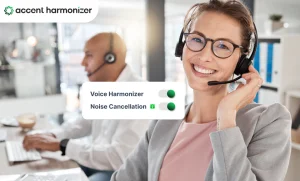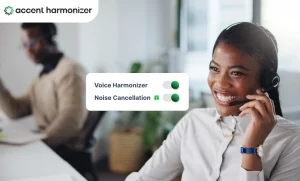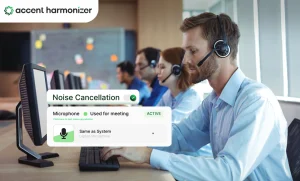
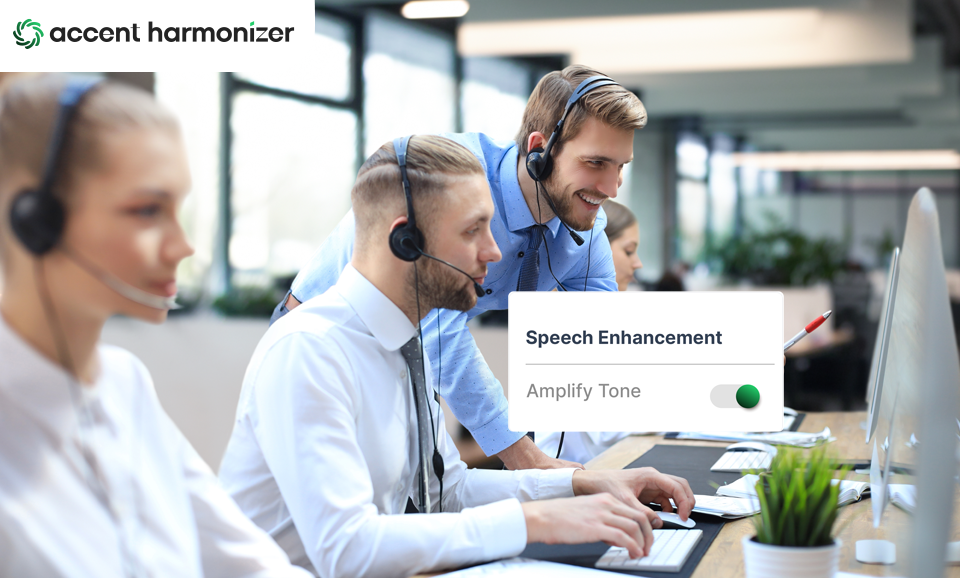
The modern offshore contact center runs on a hidden paradox. Your offshore agents possess deep product knowledge, technical skills, and customer empathy. Yet, traditional customer experience dashboards frequently miss a critical metrics killer.
Communication friction silently damages your customer interactions every single day. Because minor linguistic gaps exist, customers frequently ask agents to repeat themselves. Consequently, this friction increases Average Handle Time (AHT) and drives up repeat explanations.
This friction also accelerates agent fatigue and causes noticeable inconsistencies during quality assurance audits. Fortunately, enterprise technology is changing. Real-time AI speech clarity offshore agents use today is emerging as foundational infrastructure for global voice operations.
What Is AI Speech Clarity for Offshore Agents?
Enterprise software must do more than simply clean up background static. True AI speech clarity offshore agents rely on combines multiple processing steps into one instant pipeline. Specifically, it blends real-time speech enhancement, accent harmonization, phonetic smoothing, and noise suppression.
| How Real-Time AI Speech Clarity Works? |
|---|
Agent Audio Input → Noise Isolation Layer Removes barking dogs, sirens, and static → Phonemic Smoothing Engine Adjusts syllable timing in real time → Identity Preservation Filter Keeps original vocal tone and warmth → Optimized Output Audio Clear, natural audio delivered to customer |
Traditional neutralization often strips away the human element. Conversely, modern voice tools focus entirely on understanding while protecting worker identity.
Why Do Offshore Contact Centers Struggle With Speech Clarity?
Global Business Process Outsourcing (BPO) destinations operate under intense environmental pressure. Agents work in multilingual environments and support customers across multiple continents. While script mastery is common, offshore delivery architectures also face a severe hidden comprehension tax in offshore contact centers. It directly impacts customer satisfaction.
Noisy home offices, barking dogs, and street traffic constantly challenge audio quality. Unstable local network connections and variable bandwidth also degrade standard VoIP streams. Therefore, software must fix these issues before audio reaches the customer.
The Hidden Cognitive Load on Offshore Agents
When communication friction occurs, your offshore agents bear the mental burden. Agents must constantly monitor their own pronunciation. They manually correct their speech patterns mid-sentence.
| “ The mental exhaustion of self-monitoring causes call center agents to burn out six months faster than those using voice-smoothing tools. Clarity software directly protects employee retention. ” — VP of Global Workforce Operations |
This constant repetition leads to severe cognitive fatigue. Over an eight-hour shift, this stress erodes agent confidence and damages morale.
Clean audio ensures your AI QA systems and agent assist platforms work perfectly. Integrating a dedicated AI voice intelligibility tool fixes acoustic barriers at the ingestion layer before they corrupt transcription models
How Real-Time AI Speech Clarity Actually Works?
Modern voice engines process audio using an advanced digital pipeline. First, the software captures the agent’s live voice signal. Second, deep learning models isolate background noise from the core human speech. Third, the system performs real-time phoneme analysis. Fourth, the accent harmonizer applies to subtle phonetic adjustments. Finally, it delivers the optimized audio stream directly into the active phone channel.
How AI Preserves Tone, Emotion & Identity?
Enterprise buyers often worry that voice software will introduce a mechanical drone. Modern tools avoid this issue entirely.
The software preserves individual speech patterns, emotional inflections, and conversational authenticity. Because the algorithms only alter problematic phonemes, the agent still sounds completely like themselves.
Why Low Latency Matters in Live Customer Calls?
Voice processing must happen instantly to protect natural conversation flows. If the processing delay is too long, speakers will constantly interrupt each other.
| Latency Impact on Conversation Quality | ||
|---|---|---|
| Latency Range | Conversation Quality | Operational Impact |
| <150ms | Natural | Ideal for Enterprise CX |
| 150–300ms | Slight delay | Minor conversational overlap |
| >300ms | Noticeable friction | Severe communication breakdown |
Therefore, keeping processing times well below 150 milliseconds is mandatory for call center environments.
AI Speech Clarity as Infrastructure for Modern Voice AI Operations
If you feed bad audio into modern LLMs, your enterprise automation stack breaks. Inaccurate transcriptions break automated workflows and generate useless analytics. Therefore, perfect audio quality is mandatory for successful AI operations.
| The Voice Data Cleaning Chain |
|---|
Clean Live Voice → Accurate Real-Time Transcription → Flawless Agent-Assist Prompts → Reliable AI QA Logs |
Clean audio streams optimize your operations across multiple tools:
- AI QA: Accurately checks script compliance and phrase matching.
- Voice Analytics: Captures true customer sentiment without acoustic distortion.
- Agent Assist AI: Delivers relevant, accurate knowledge recommendations during live calls.
- Compliance Automation: Logs secure financial and medical interactions without gaps.
Enterprise Rollout Framework for Offshore Contact Centers
Step 1: Identify High-Friction Queues – Begin your rollout with high-emotion, high-complexity business lines. Focus on multilingual support teams, collections departments, or complex technical troubleshooting groups.
Step 2: Run Controlled Pilot Programs – Isolate a test group of agents to benchmark performance metrics. Measure baseline call duration, QA scores, and transcription accuracy against a control group.
Step 3: Validate Telephony & CCaaS Compatibility – Test the voice processing software across your active SIP environments and VoIP infrastructure. Ensure zero configuration issues occur inside your cloud contact center stack.
Step 4: Train QA & Operations Teams – Update your quality monitoring protocols to account for clearer audio streams. Recalibrate your automated monitoring systems to take advantage of the improved transcription accuracy.
Step 5: Scale Gradually Across Offshore Operations – Use an organized checklist to expand deployment across your remaining global teams.
Enterprise Deployment Checklist: Real-Time Voice Processing Integration
| Enterprise Deployment Checklist | |||
|---|---|---|---|
| Status | Deployment Phase | Technical & Operational Protocols | Target Benchmark |
| ▢ | 1. Network Profiling |
| Packet Loss < 1% |
| ▢ | 2. Endpoint Provisioning |
| 100% Silent Pass |
| ▢ | 3. CCaaS Integration |
| Direct Audio Stream |
| ▢ | 4. Telemetry & Analytics Validation |
| < 150ms Processing / 100% Ingestion |
What Enterprises Should Evaluate Before Choosing Software?
Do not buy basic noise-cancelling tools and expect enterprise-grade results. Use this detailed comparison checklist to review potential voice systems:
| Voice Clarity Solution Evaluation Criteria | ||
|---|---|---|
| Evaluation Area | Operational Priority | Why It Matters |
| Real-Time Latency | Must remain under 150ms | Prevents unnatural talking overlaps |
| Accent Coverage | Supports diverse geographies | Protects your entire global workforce |
| Noise Suppression | Filters environmental sounds | Stabilizes hybrid and home offices |
| Telephony Compatibility | Integrates with SIP/WebRTC | Ensures fast, simple engineering rollouts |
| Security & Compliance | SOC2, HIPAA, and GDPR readiness | Protects sensitive customer records |
| Voice Preservation | Retains original human timber | Maintains brand trust and empathy |
Conclusion
When you remove vocal friction, your global call centers perform at a completely different level. Your customer experience metrics improve, automated QA scoring becomes reliable, and agent retention increases.
Deploying real-time voice tools is no longer about simple desktop adjustments. Instead, it is an essential infrastructure upgrade for modern global enterprise operations.
Modernize Your Offshore Voice Operations
Eliminate communication friction across your global BPO teams. Deploy real-time voice optimization to lower handle times and increase transcription accuracy instantly.
Test it on Your Lines: Schedule a Live Architecture Demo