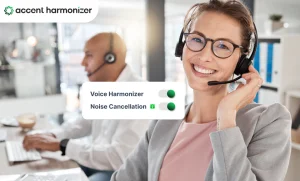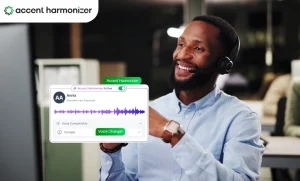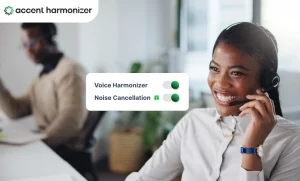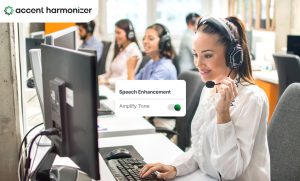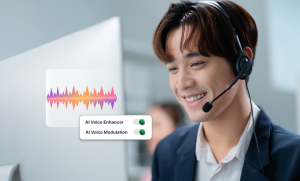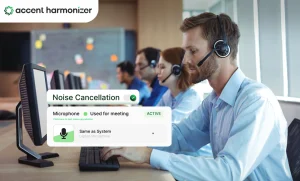

Most contact centers spend millions tracking uptime, queue lengths, and network ping times. However, legacy executive dashboards completely overlook acoustic intelligibility. When callers and human agents struggle to understand specific syllables, operational efficiency tanks.
Every misunderstood word creates immediate friction. Consequently, this acoustic barrier silently drives up overhead costs. An AI voice intelligibility tool acts directly on live audio streams to resolve this issue. It fixes acoustic barriers before they impact your primary customer experience metrics.
What Is an AI Voice Intelligibility Tool?
An AI voice intelligibility tool uses real-time deep learning to optimize spoken phonemes for maximum human comprehension. Phonemes are the smallest distinct units of sound in speech. Traditional tools merely suppress steady background noise like fans or static.
Conversely, an intelligibility engine actively rebuilds garbled audio elements. Specifically, it sharpens consonants, smooths vocal timing, and eliminates room echoes instantly. The process bridges the acoustic gap between different regional dialects and global buyers.
Real-Time Voice Intelligibility AI vs. Traditional Noise Cancellation
Many customer experience leaders confuse basic noise filters with true intelligibility tools. However, the operational differences are stark.
| Traditional Noise Cancellation vs AI Voice Intelligibility Tool | ||
|---|---|---|
| Performance Attribute | Traditional Noise Cancellation | AI Voice Intelligibility Tool |
| Core Architecture | Spectral subtraction filters | Neural phonemic smoothing models |
| Primary Impact | Removes steady background hums | Maximizes speech comprehension |
| Identity Preservation | Often creates muffled voice tones | Retains individual vocal warmth |
| Downstream AI Impact | Leaves broken syllables intact | Delivers perfect audio data fields |
Traditional tools focus on the environment. Conversely, modern intelligibility engines focus entirely on the human message.
The Operational Pain Points Damaging Your Center Costs
Every time a customer says, “What was that?”, your telephony costs tick upward. These micro-seconds of conversational repair quickly compound across thousands of daily concurrent calls. Therefore, phonetic friction directly drives up your Average Handle Time (AHT).
Complex financial details or technical troubleshooting steps also get lost easily over volatile network connections. As a result, your First Call Resolution (FCR) rates drop significantly. Customers become frustrated, demand manager escalations, and leave lower satisfaction scores.
High agent attrition normally destroys your language-coaching investments. This technology embeds directly into the communication layer. This infrastructure approach makes your clarity strategy completely immune to staff turnover.
Key AI Voice Intelligibility Tool Benefits for Global Operations
Deploying software clarity tools alters your global talent strategy completely. For instance, you can assign staff based on actual technical skills rather than regional accents. Route complex financial or technical issues to your most qualified global specialists. The software eliminates phonetic friction automatically.
| The Voice Data Cleaning Chain |
|---|
Clean Audio Ingestion → Flawless Text Transcription ↓ Accurate Real-Time Guidance ← Reliable Compliance Logs |
Agents stop fighting repetitive clarification loops during difficult customer interactions. Because their daily shifts are less stressful, workplace burnout drops. This operational stability directly lowers costly agent attrition rates across offshore teams.
Strategic Buyer Checklist: Evaluating Intelligibility Systems
Do not purchase simple desktop audio filters and expect enterprise-grade performance. Review potential vendors against these technical guardrails:
- Acoustic Latency Thresholds: The engine must process audio in under 30 milliseconds. It speeds prevents unnatural talking overlaps on live calls.
- Telephony Stack Compatibility: Ensure simple integration via standard SIP, WebRTC, or cloud CCaaS routing layers.
- Data Security Integrity: Verify the platform maintains strict adherence to SOC 2 Type II, HIPAA, and GDPR governance boundaries.
| “ Acoustic distortion is the single largest point of failure for enterprise voice analytics. Fixing audio at the ingestion point is mandatory for reliable automation. ” — Chief Technology Officer, Global BPO Network |
Conclusion
Traditional noise suppression clears the room background, but it leaves broken syllables and phonetic friction completely untouched. If you feed garbled audio into your modern LLMs and analytics platforms, your entire contact center automation stack degrades.
The enterprise market is moving quickly from simple noise removal toward cognitive speech clarity. Vocal friction drains your daily operational budgets and limits your staffing flexibility.
Advantages of AI accent harmonization software includes:
- Active Neural Phonemic Smoothing: Rebuild spoken phonemes, sharpen consonants, and eliminate room echoes instantly for maximum human comprehension.
- Pristine Downstream Voice Data: Fuel real-time agent-assist tools and sentiment engines with flawless, zero-distortion input text transcripts.
- Staff Turnover Immunity: Build a permanent clarity solution into your active telephony layer instead of losing language coaching investments to agent attrition.
Deploying an AI voice intelligibility tool protects your human connections. This software provides the clean data baseline required for your entire automation layer.
Protect Your Contact Center Audio Integrity
Stop letting poor speech clarity drain your daily operational budgets and corrupt your data analytics. Install a set-and-forget cognitive clarity layer across your entire global workforce.
- Explore the Core Software: Optimize Your Communications with Accent Harmonizer
- Schedule an Architecture Review: Book Your Live Telephony Demo Today