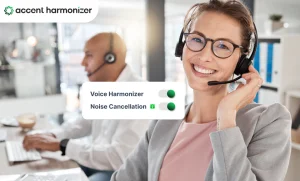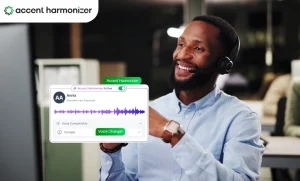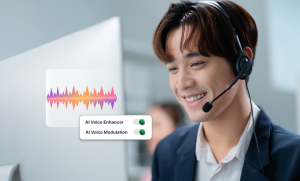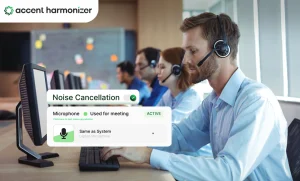

Most contact centers do not start their journey by looking for AI Accent Localization. Instead, they start by investigating painful operational symptoms. For instance, customer support teams notice a steady rise in average handling time. Customers frequently ask agents to repeat themselves during live calls. Consequently, quality assurance teams flag communication friction, and training budgets produce inconsistent results. Eventually, leadership must look beyond individual agent performance to address the core communication infrastructure.
Traditional contact centers long relied on intensive training programs to alter how agents speak. However, modern enterprises now evaluate automated voice software to resolve these clarity issues instantly. The real enterprise decision centers on operational deployment. Should your contact center continue relying on long accent neutralization programs? Or should you deploy real-time AI Accent Localization technology that modifies audio during live conversations?
Why Do Contact Centers Started Looking Beyond Accent Neutralization Programs?
Historically, offshore operations invested heavily in speech coaching. Brands did not design these programs to erase cultural identity. Rather, they wanted to solve basic comprehension friction and reduce repeat requests. Customer impatience frequently leads to early escalations when communication delays happen. Therefore, organizations targeted the mechanics of speech to protect the customer experience.
Why Training Programs Often Struggle to Scale?
Human speech coaching requires significant time and ongoing operational oversight. Agent onboarding schedules grow longer because language habits take months to adjust. Furthermore, high agent turnover rates quickly erode those training investments. When trained agents leave, managers must restart the retraining cycle with new recruits. Because communication friction appears thousands of times per day, relying solely on human coaching becomes operationally expensive.
AI Accent Localization vs Accent Neutralization: The Operational Differences
Organizations must evaluate these two approaches through an operational lens. Human training changes the worker, while software changes the data path.
| Accent Neutralization vs AI Accent Localization | ||
|---|---|---|
| Category | Accent Neutralization | AI Accent Localization |
| Method | Human coaching | Real-time speech processing |
| Deployment Speed | Weeks to months | Immediate after rollout |
| Consistency | Varies by individual | System-driven |
| Scalability | Training dependent | Technology dependent |
| Ongoing Maintenance | Continuous coaching | Platform management |
Why Do Enterprises Evaluate Both Approaches Differently?
Human training operates as a workforce management initiative. It demands constant HR hours, performance tracking, and managerial compliance. On the other hand, real-time AI Accent Localization software functions as an infrastructure asset. Consequently, technology procurement teams evaluate the software based on network architecture, server stability, and deployment risk rather than agent compliance.
Real-Time Accent Localization Changes Communication Friction
Operational efficiency depends on seconds saved per interaction. When an agent repeats a phrase, the call duration stretches. Specifically, a 20-second delay multiplied across millions of annual calls increases total staffing requirements. Consequently, contact centers must hire more headcount just to manage conversational waste.
How Communication Friction Creates Escalation Loops?
Conversational delays do more than inflate handle times. They irritate customers quickly. When a caller struggles to understand an agent, frustration builds. This interaction fatigue frequently causes the customer to demand a supervisor intervention. Therefore, simple comprehension issues transform minor support tickets into expensive manager escalations.
Why Attrition Makes Communication Training Difficult to Compound?
Contact centers face structural turnover challenges globally. If an agent leaves after three months, the brand loses its entire training investment. Conversely, software licenses remain inside your infrastructure when personnel changes occur. The technology maintains performance stability regardless of workforce churn.
Infrastructure Architecture Matters More Than Accent Accuracy
Telecom engineers always prioritize network stability over theoretical software benefits. Specifically, they ask if voice processing layers will introduce audio latency. In live support environments, a delay of even 200 milliseconds disrupts natural conversation. Therefore, software must process audio streams instantly to avoid creating caller frustration.
Why Telephony Teams Worry About Voice Processing Layers?
Adding any engine into the voice path introduces potential failure points. Telephony teams carefully analyze SIP routes, packet loss, and jitter. If an enterprise tool drops voice packets, call quality degrades immediately. For this reason, the underlying architecture must prove it can handle massive concurrent call loads.
Local Audio Processing vs Network-Level Voice Processing
To mitigate network risk, some platforms utilize local virtual audio device architecture. This method processes speech directly on the agent’s workstation before sending the data to the cloud. Because the processing occurs locally, it reduces deployment complexity and avoids complex SIP trunk integrations.
Questions Procurement Teams Ask Before Approving AI Accent Localization
- How Does It Integrate with Existing Contact Center Platforms?
Enterprise buyers need software that connects directly with their current systems. Omind’s Accent Harmonizer is built to sit natively alongside major systems. Because the tool functions as a standard audio driver layer on the desktop, it eliminates the need for expensive custom developments.
- Does It Require Changes to Existing Voice Infrastructure?
Altering core telecom routing is a risky operational move. Therefore, buyers prefer tools that act as a standard audio driver. If the system installs without changing existing SIP configurations, the implementation risk drops significantly.
- How Is Audio Handled During Processing?
Data privacy mandates strict compliance standards. Security teams will ask if the software records, stores, or transmits audio payloads to third-party servers. Consequently, platforms must process speech locally or provide end-to-end encryption to satisfy regulatory audits.
When AI Accent Localization Is a Good Fit—and When It Isn’t
| Ideal vs Non-Ideal Environments for Voice Clarity Solutions | |
|---|---|
| Ideal Operational Environments • Offshore Contact Centers: Teams managing high-volume voice operations across different time zones. • Global BPO Environments: Outsource providers needing to normalize delivery quality across multiple international sites. • Customer-Facing Support: High-stakes customer service lines where handle time directly impacts retention. | Non-Ideal Environments • Low-Volume Teams: Operations that rely primarily on digital chat or email communication. • Internal Environments: Help desks where internal staff already understand corporate jargon and regional accents. |
Evaluation Checklist for AI Accent Localization Platforms
Capability Evaluation
- Verify real-time processing speeds to ensure natural conversational flow.
- Check voice preservation so the agent still sounds like themselves.
- Test acoustic noise handling to filter out background contact center environment sounds.
Technical Evaluation
- Measure the exact latency profile during peak concurrent call volumes.
- Confirm infrastructure compatibility with your standard desktop OS images.
- Audit all security controls regarding consumer data privacy laws.
Optimize Your Voice Infrastructure
Is communication friction driving up your average handling time? Contact our enterprise team to schedule a technical architecture review and discover how Accent Harmonizer software integrates into your existing platform.