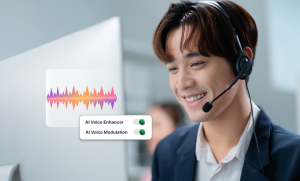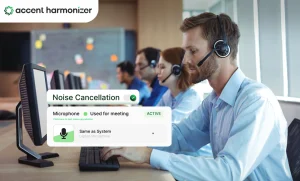

Many contact centers spend years trying to improve call center audio quality. They deploy premium headsets, optimize local networks, and invest in hardware noise cancellation. Yet, customers still ask agents to repeat themselves during critical moments. Calls run longer than expected, and escalations continue to rise.
The core problem is often not poor audio transmission. Instead, contact centers resolve the sound-quality issue but fail to fix the customer-understanding problem. Specifically, this distinction impacts retail contact centers, global support operations, and enterprises managing offshore customer service teams.
Why Repetition Is More Expensive Than Most Contact Centers Realize?
When customers constantly ask agents to repeat information, a destructive loop begins. Clarification loops extend simple interactions into lengthy chores. Consequently, longer conversations increase overall customer effort and damage brand perception.
How Repetition Creates Operational Cost?
Communication breakdowns create a direct domino effect across the enterprise:
| Cost of Repetition Metrics | |
|---|---|
| Macro Operational Impact | Communication Breakdowns ➔ AHT Inflation ➔ Reduced Agent Capacity ➔ Increased Staffing Needs ➔ Queue Growth ➔ Customer Dissatisfaction |
| Average Time Inflation | +45 seconds per repetition-heavy call.
|
| Daily Capacity Loss | 12% reduction in daily agent call capacity.
|
| Escalation Surge | 3x higher likelihood of supervisor escalation.
|
Why Do Retail Contact Centers Feel the Impact First?
Retail operations handle immense volumes of seasonal interactions regarding delivery inquiries, returns, and refunds. Because these conversations directly impact revenue, any friction during the call immediately threatens customer loyalty.
Why do Contact Centers Often Misdiagnose the Problem?
Many CX leaders look at their dashboards and see perfect metrics. Specifically, their audio quality scores remain high, and QA metrics look acceptable. However, customer repetition remains frequent and escalations stay elevated.
Audio Quality Problems vs Customer Understanding Problems
To fix this friction, operations leaders must differentiate between technical delivery and human comprehension.
| Audio Infrastructure vs. Cognitive Friction Matrix | |
|---|---|
| Technical Signal Quality | Human Customer Comprehension |
| Network Bandwidth & packet delivery | Instant cognitive processing |
| Audio fidelity & decibel levels | Speech intelligibility & accent familiarity |
| Hardware sound suppression | Reduced mental strain for the listener |
Leaders mistake understanding problems for audio deficiencies because the symptoms look identical on paper. Therefore, they buy better hardware when the actual barrier is speech intelligibility.
Why Traditional Audio Quality Improvements Reach a Ceiling?
The traditional playbook focuses entirely on infrastructure. Teams purchase better microphones, upgrade local connectivity, and construct isolated acoustic environments.
What Noise Cancellation Actually Solves?
These tools excel at removing background noise, environmental interference, and raw audio distortion. However, they only deliver a clean signal to the customer’s ear.
Why Repetition Continues After Audio Improvements?
A technically clear call can still be incredibly difficult to understand. If the listener cannot decode the spoken syllables, the pristine audio quality serves no actual business purpose.
The Four Layers of Modern Call Center Audio Quality
- Layer 1 — Signal Quality: This foundational layer relies on network reliability and stable voice transmission quality. It ensures that data packets arrive without dropping out.
- Layer 2 — Noise Quality: This layer covers basic noise suppression and environmental control. It ensures that barking dogs or office chatter do not bleed into the conversation.
- Layer 3 — Speech Clarity: Clarity focuses on real-world intelligibility, pronunciation consistency, and the immediate reduction of verbal repetition.
- Layer 4 — Customer Understanding: The final layer enables faster comprehension, smoother interactions, and rapid issue resolution. This is where real business value lives.
Why Most Contact Centers Stop at Layer Two?
Most enterprises stop at noise quality because standard tools cannot address speech patterns. As a result, they experience stagnant CSAT scores despite spending millions on IT infrastructure.
When Should Contact Centers Move Beyond Traditional Audio Enhancement?
Enterprises need a dedicated layer that transforms clear sound into clear meaning. Without this piece, you are simply delivering crisp audio that customers still fail to comprehend.
Five Indicators Your Problem Is No Longer Audio Quality
- The actual voice calls sound completely clear to internal QA reviewers.
- Customer requests for repetition remain high during transactional moments.
- Supervisor escalations continue to climb despite hardware upgrades.
- Offshore teams require increasingly longer ramp-up times to hit targets.
- Customer understanding scores remain inconsistent across global regions.
Why Speech-Level Optimization Is Emerging in Modern Contact Centers
- Moving Beyond Audio Processing: Technology must evolve from processing raw sound waves to optimizing spoken speech. This shift changes the operational focus from hardware performance to human cognitive ease.
- The Rise of Real-Time Speech Intelligence: Real-time speech intelligence software alters the mechanics of the conversation as it happens. Therefore, agents can deliver information without changing their natural speaking style.
Why Are Enterprises Expanding Their Definition of Audio Quality?
Forward-thinking enterprises are shifting their core question. They no longer ask, “Can customers hear the agent?” Instead, they ask, “Can customers immediately understand the agent?”
| Strategic Insights |
|---|
“When we looked at our repeat call data, we realized our customers weren’t complaining about background static. They were struggling with phonetic processing. Fixing the network didn’t move the needle; fixing the speech intelligibility did.” — VP of Customer Experience, Global Retail Brand |
How Accent Harmonizer Extends the Audio Quality Stack?
Standard software stops at the microphone jack. It ignores the phonetic structures that cause real-world comprehension issues during global support calls.
How Accent Harmonizer Addresses Speech Intelligibility?
Accent Harmonizer acts as a real-time speech intelligibility layer. Specifically, it dynamically adjusts spoken nuances to align with the listener’s native speech expectations.
Operational Outcomes Enterprises Pursue
By inserting this intelligent layer, companies achieve reduced repetition, lower escalations, and optimized AHT. Ultimately, this creates a less stressful environment for both agents and customers.
What Enterprise Buyers Should Evaluate Beyond Audio Enhancement?
Here is a checklist for enterprise buyers:
- Latency and Live Conversation Performance: Milliseconds matter during live support. Any speech optimization tool must process voice data instantly to prevent agents from talking over customers.
- Deployment Architecture: Look for software that utilizes a Virtual Audio Device (VAD). This architecture requires no complex SIP modifications or disruptive telephony routing changes.
- CCaaS Compatibility: Your chosen software must integrate with major CCaaS platforms without requiring custom code or heavy professional services.
- Security, Privacy, and Compliance: Ensure the system processes voice data locally or securely. It must comply with enterprise compliance mandates like PCI-DSS, GDPR, and HIPAA.
- User Adoption and Operational Readiness: The best software requires zero agent training. It should run quietly in the background so agents can focus entirely on solving customer issues.
Conclusion
For years, call center audio quality initiatives focused strictly on improving sound clarity. That infrastructure work remains necessary for modern operations.
However, as contact centers become increasingly global, sound quality alone is no longer enough. Organizations need real-time voice fluency solution to treat comprehension problems. The future of contact center performance is not simply clearer audio. It is measurable customer understanding.
Ready to move beyond basic noise cancellation?
Talk to our team today to see how Accent Harmonizer integrates into your existing CCaaS platform to eliminate repetition, lower your AHT, and transform clear audio into immediate customer understanding.