CX teams invest heavily in digital journeys. They often check off the ‘audio quality’ box during procurement without mapping out how the acoustic layer links to downstream KPIs. However, accent harmonization for CX leaders is one of the most overlooked levers for improving support call. That call is where trust gets built or quietly destroyed, one confusing exchange at a time.
Why Voice Still Carries the Heaviest Weight?
Your app works and chatbot handles the easy stuff. Then the customer calls. Suddenly, the experience feels heavier. They ask the agent to repeat themselves multiple times and conversation slows. Their patience drains minute by minute.
Most CX strategies never address this directly, but they should. Voice calls still handle the moments that shape loyalty: billing disputes, fraud alerts, escalations, retention conversations. These interactions carry emotional weight and move fast. Yet many companies treat communication friction as unavoidable.
The Real Source of Friction on Support Calls
Here is what most teams miss. A large share of customer frustration has nothing to do with agent knowledge or intent. The agent may be completely right. However, the customer still struggles to follow the conversation.
It happens because speech comprehension is physical, not just linguistic. Different phonetic patterns collide over compressed phone audio. Familiar words suddenly require effort to decode. So the customer stops focusing on solving the problem. Instead, they work on translating the conversation.
That is the real CX failure.
Clean Audio Is Not the Same as Clear Communication
Most contact centers already invested in voice infrastructure like:
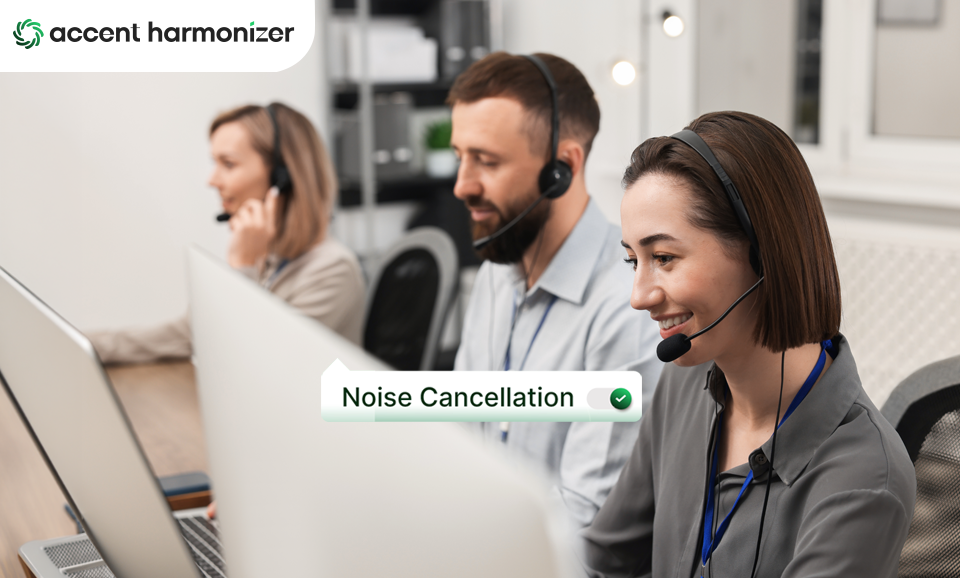
- Noise cancellation
- HD calling
- Echo suppression
- Better bandwidth
Those upgrades matter. However, clean audio does not equal easy comprehension. You can hear every word clearly and still struggle to understand the speaker. That is why complaints persist even after infrastructure improvements.
True optimization means shifting from acoustic speech clarity to real-time conversation understanding. Customers rarely say, “The phonetic structure created cognitive strain.” They say, “I kept asking them to repeat themselves.” Or worse: “I gave up and switched providers.”
How Repetition Quietly Kills Your CSAT Scores?
Every repeat request changes the emotional temperature of the call. The customer becomes less confident, agent slows down and handle time climbs. Traditional dashboard metrics frequently mask systemic communication drop-offs. It makes data critical to deploy tools designed to eliminate the customer understanding gap in global teams immediately. Meanwhile, dashboards show satisfaction scores that refuse to move due to comprehension fatigue.
Why Accent Harmonization for CX Leaders Matters More Now?
As automation absorbs routine interactions, human calls become more emotionally loaded. Simple requests never reach agents anymore. What remains are difficult conversations: escalations, financial disputes, healthcare coordination, retention calls. These carry more risk and more emotional weight.
Therefore, communication clarity matters more than it ever has. Customers tolerate chatbot friction. They are far less forgiving when a human being cannot communicate clearly during a high-stress moment.
What Accent Harmonization Actually Does?
AI accent harmonizer for call center does not replace the agent’s voice or erase identity. And it is not a training workaround pretending to be AI magic. Specifically, it adjusts phonetic characteristics in real time so speech becomes easier for the listener to process.
When comprehension improves, customers interrupt lessn and repetition drops. This makes calls move faster and agents sound more confident. The technical difference is subtle. However, emotionally, it changes the entire tone of the call.
Your Team Already Tracks the Symptoms
Most organizations already measure the damage without naming the cause:
- Low CSAT after otherwise successful resolutions
- Long handle times on simple requests
- Higher customer effort scores
- Repeat calls
- Escalation spikes
These problems often get blamed on coaching gaps or staffing. Sometimes, however, the issue is simpler: the customer got tired during the conversation. In addition, poor sentiment on voice interactions often contrasts sharply with strong digital experience scores. That gap is a signal. It points directly at the voice layer.
Operational Reality of Deploying Accent Harmonization for CX Leaders
One reason companies delay this investment is fear of disruption. They imagine large migrations or platform replacements. That is rarely the case.
Accent translation software with AI works within the existing telephony layer. Your CCaaS stack, CRM, routing, and workflows stay intact. As a result, CX leaders can test impact without rebuilding operations. The improvement is measurable quickly. You will see shifts in CSAT, customer effort scores, first-call resolution, average handle time, and repeat call rates. Customers respond immediately to easier conversations. The patterns show up fast.
The Brands That Win Remove the Friction Others Ignore
Most companies still accept communication fatigue as normal, but customers do not. They remember the calls that felt exhausting and the memory sticks to your brand. Because in customer experience, ease is often the difference between trust and churn.
Omind AI’s Accent Harmonizer focuses on exactly what most CX stacks still ignore: making conversations easier to understand in real time. Because your customers should spend their energy solving problems and not decoding speech.
Stop Forcing Your Customers to Work This Hard to Understand Your Brand
When a critical support call turns into a translation exercise, customer confidence erodes long before the agent can deliver a resolution. Omind AI’s Accent Harmonizer optimizes phonetic clarity in real time within your existing telephony path—allowing your global agents to retain their authentic voice identity while making every conversation effortless for the listener.
Want to eliminate comprehension fatigue across your channels?
Stop letting unlogged phonetic variations inflate your average handling times and stress your frontline offshore operations. Our live call accent harmonizer integrates natively into your enterprise CCaaS stack to realign real-time phoneme delivery. Accent Harmonizer by Omind ensures immediate customer comprehension without altering your agents’ authentic identity.
Request Your Live Operational Walkthrough & Audio Assessment Demo